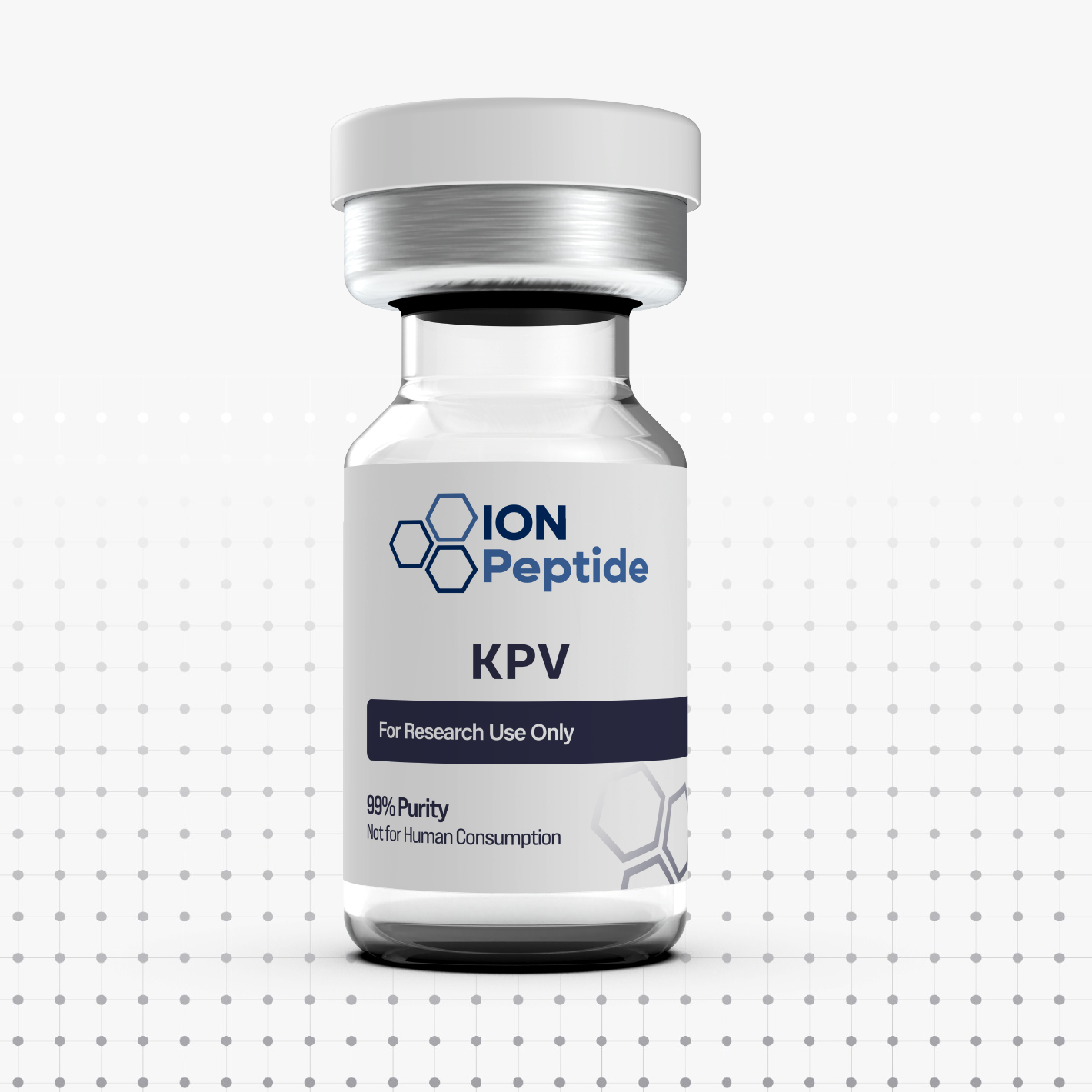
Buy KPV 10mg Online
Buy KPV 10mg Online is a short bioactive peptide that has gained increasing attention in peptide science, molecular biology, immunology, and cellular signalling research. Consisting of only three amino acids—Lysine (K), Proline (P), and Valine (V)—KPV represents an example of how small peptide fragments can become important subjects of scientific investigation.
Researchers study KPV because it is derived from alpha-melanocyte-stimulating hormone (α-MSH), a naturally occurring peptide involved in cellular communication and biological regulation. Although KPV is a relatively small peptide, scientists continue exploring its biochemical properties, molecular interactions, and role within broader peptide research.
The growing interest in peptide-based science has expanded investigations into naturally derived peptide fragments such as KPV. These studies help researchers better understand how peptides function within biological systems and contribute to cellular communication pathways.
This article provides a comprehensive educational overview of KPV 10mg, including its scientific background, molecular structure, research applications, and significance within modern peptide research.
What Is KPV?
KPV is a tripeptide composed of three amino acids:
- Lysine (K)
- Proline (P)
- Valine (V)
The peptide originates from a specific sequence found within alpha-melanocyte-stimulating hormone (α-MSH), a naturally occurring signalling peptide produced in the body.
Researchers became interested in KPV after discovering that certain biological activities associated with larger peptide hormones may be retained within smaller peptide fragments.
As a result, KPV has become an important subject in studies involving peptide signalling, molecular biology, and biochemical regulation.
Understanding Alpha-Melanocyte-Stimulating Hormone (α-MSH)
To understand KPV, it is important to understand its parent molecule, α-MSH.
Alpha-melanocyte-stimulating hormone belongs to the melanocortin family of peptides and participates in numerous biological communication pathways.
Researchers study α-MSH because it is involved in:
- Cellular signaling
- Hormonal communication
- Molecular regulation
- Physiological adaptation
- Receptor interactions
KPV represents a small fragment derived from this larger peptide structure, making it valuable for investigating structure-function relationships in peptide biology.
The Discovery of KPV
Scientific interest in peptide fragments increased as researchers sought to determine whether smaller sections of larger peptides could maintain biological activity.
Investigators discovered that certain peptide fragments retained unique characteristics despite containing only a few amino acids.
KPV emerged as one of the most studied examples of these naturally derived peptide fragments.
Its simplicity, stability, and relationship to α-MSH have made it a useful model for scientific research.
Today, KPV remains an important topic within peptide science and molecular biology.
Molecular Structure of KPV
The molecular structure of KPV is relatively simple compared with many larger peptides.
However, researchers recognise that even small peptides can exhibit significant biological relevance.
Lysine
Lysine is an essential amino acid involved in numerous biochemical processes and protein structures.
Proline
Proline contributes unique structural characteristics due to its cyclic molecular configuration.
Valine
Valine is a branched-chain amino acid commonly found within proteins and peptide sequences.
Together, these three amino acids form the KPV peptide sequence.
Scientists continue examining how this structure influences peptide behaviour and molecular interactions.
Why Researchers Study KPV
Several factors contribute to the growing scientific interest in KPV.
Peptide Signaling
Researchers investigate how small peptides participate in cellular communication.
Molecular Regulation
Studies examine the mechanisms through which peptides influence biological pathways.
Structure-Function Relationships
KPV provides a useful model for understanding how peptide structure relates to biological activity.
Cellular Communication
Scientists study how peptide fragments interact with cells and signalling networks.
Biochemistry
Researchers investigate molecular interactions and biochemical characteristics associated with peptide fragments.
These areas continue to drive scientific exploration.
Peptides and Cellular Communication
Peptides serve as important signalling molecules throughout biological systems.
Researchers study peptide communication because it helps explain:
- Cellular coordination
- Signal transmission
- Molecular adaptation
- Physiological regulation
- Biological responses
KPV contributes to the scientific understanding of these communication networks.
Although small in size, peptides such as KPV help researchers investigate fundamental principles of molecular signalling.
The Importance of Small Peptides
Historically, many scientists focused on larger proteins and hormones.
However, modern research has demonstrated that small peptides can also play significant roles in biological systems.
Researchers investigate small peptides because they often:
- Interact with cellular targets
- Participate in signalling pathways
- Influence molecular communication
- Support regulatory functions
- Provide insights into peptide biology
KPV remains one of the most recognised examples of a biologically relevant tripeptide.
KPV and Molecular Biology Research
Molecular biology focuses on understanding how biological systems operate at the molecular level.
Researchers studying KPV examine:
Cellular Signalling Pathways
Scientists investigate how peptides contribute to communication between cells.
Gene-Related Processes
Research explores interactions between signalling molecules and cellular regulatory systems.
Protein Interactions
Studies examine how peptides interact with larger biological molecules.
Regulatory Networks
Researchers seek to understand how peptide signals contribute to biological organisation.
These investigations help expand knowledge of molecular communication systems.
Research Applications of KPV
KPV is studied across numerous scientific disciplines.
Molecular Biology
Researchers investigate signalling mechanisms and peptide-mediated communication.
Biochemistry
Studies focus on peptide structure, molecular interactions, and biochemical properties.
Cellular Biology
Scientists examine communication pathways within cellular systems.
Immunology Research
Researchers explore interactions between signalling molecules and biological regulatory systems.
Peptide Engineering
KPV serves as a model compound for understanding peptide design and functionality.
These applications highlight the versatility of peptide research.
Structure-Function Relationships in Peptide Science
One of the most important goals in peptide science is understanding how molecular structure influences biological behaviour.
Researchers investigate:
- Amino acid sequences
- Structural organization
- Molecular flexibility
- Cellular interactions
- Signaling capabilities
Because KPV contains only three amino acids, it provides a simplified model for studying these relationships.
Its straightforward structure allows scientists to examine peptide behaviour in a controlled manner.
Peptide Engineering and Biotechnology
Advances in biotechnology have greatly expanded peptide research.
Scientists use peptide models such as KPV to explore:
- Molecular design strategies
- Synthetic peptide development
- Biological specificity
- Structural optimization
- Research applications
Peptide engineering remains an important area of scientific innovation and discovery.
Cellular Signalling Networks
Cells communicate through highly organised signalling systems.
Researchers study these networks because they coordinate:
- Biological responses
- Cellular adaptation
- Molecular regulation
- Physiological communication
- Environmental interactions
KPV contributes to understanding how peptide signals influence these communication pathways.
Modern Advances in Peptide Research
Technological innovations have transformed peptide science.
Researchers now use advanced analytical methods to study:
Molecular Structure
High-resolution techniques provide detailed structural information.
Cellular Interactions
Scientists investigate how peptides communicate with biological systems.
Biochemical Pathways
Studies examine molecular processes influenced by peptide activity.
Systems Biology
Researchers explore how peptides integrate into larger biological networks.
These advancements continue to expand scientific understanding of peptide function.
Quality Considerations in Peptide Research
Reliable scientific investigations require high-quality research materials.
Researchers commonly evaluate:
Purity
High-purity materials help reduce variability and improve reproducibility.
Identity Verification
Analytical testing confirms molecular composition and structural integrity.
Stability
Scientists assess how peptides behave under various laboratory conditions.
Manufacturing Consistency
Reliable production methods support dependable research outcomes.
Documentation
Comprehensive quality-control records contribute to scientific transparency.
These practices help maintain confidence in scientific findings.
Storage and Handling Practices
Proper storage and handling help preserve peptide quality.
General laboratory recommendations include:
- Following manufacturer guidelines
- Maintaining appropriate temperatures
- Protecting materials from moisture
- Using sterile laboratory procedures
- Minimising contamination risks
Researchers should always follow institutional laboratory protocols and safety standards.
Future Directions in KPV Research
Scientific interest in KPV continues to expand.
Future areas of investigation may include:
Advanced Peptide Biology
Researchers continue exploring the biological significance of peptide fragments.
Cellular Communication Studies
Scientists seek a deeper understanding of peptide-mediated signalling pathways.
Biotechnology Applications
Advances in peptide engineering may generate new research opportunities.
Molecular Regulation
Studies continue investigating how peptide fragments participate in biological systems.
Systems Biology
Future research may examine how KPV integrates into larger physiological networks.
These developments are expected to contribute significantly to peptide science.
Evidence-Based Scientific Investigation
Scientific progress depends upon rigorous methodology and objective evaluation.
Researchers studying KPV emphasise:
- Peer-reviewed research
- Reproducible experiments
- Accurate data analysis
- Transparent reporting
- Continuous scientific review
These principles help ensure that scientific conclusions are supported by reliable evidence.
Conclusion
KPV 10mg remains an important topic within peptide science, molecular biology, and cellular communication research. As a naturally derived tripeptide originating from alpha-melanocyte-stimulating hormone, KPV provides researchers with a valuable model for studying peptide structure, signalling mechanisms, and molecular interactions.
Ongoing investigations continue to expand scientific understanding of small peptide fragments and their roles within biological systems. As peptide research advances, KPV is expected to remain a significant focus within studies exploring cellular communication, molecular regulation, and peptide engineering.
For educational information about peptide research and related scientific topics, visit https://ionpeptides.store/.
General inquiries:
Website: https://ionpeptides.store/
WhatsApp: +1 (318) 341-5522
Email: support@ionpeptides.online
Related products
All