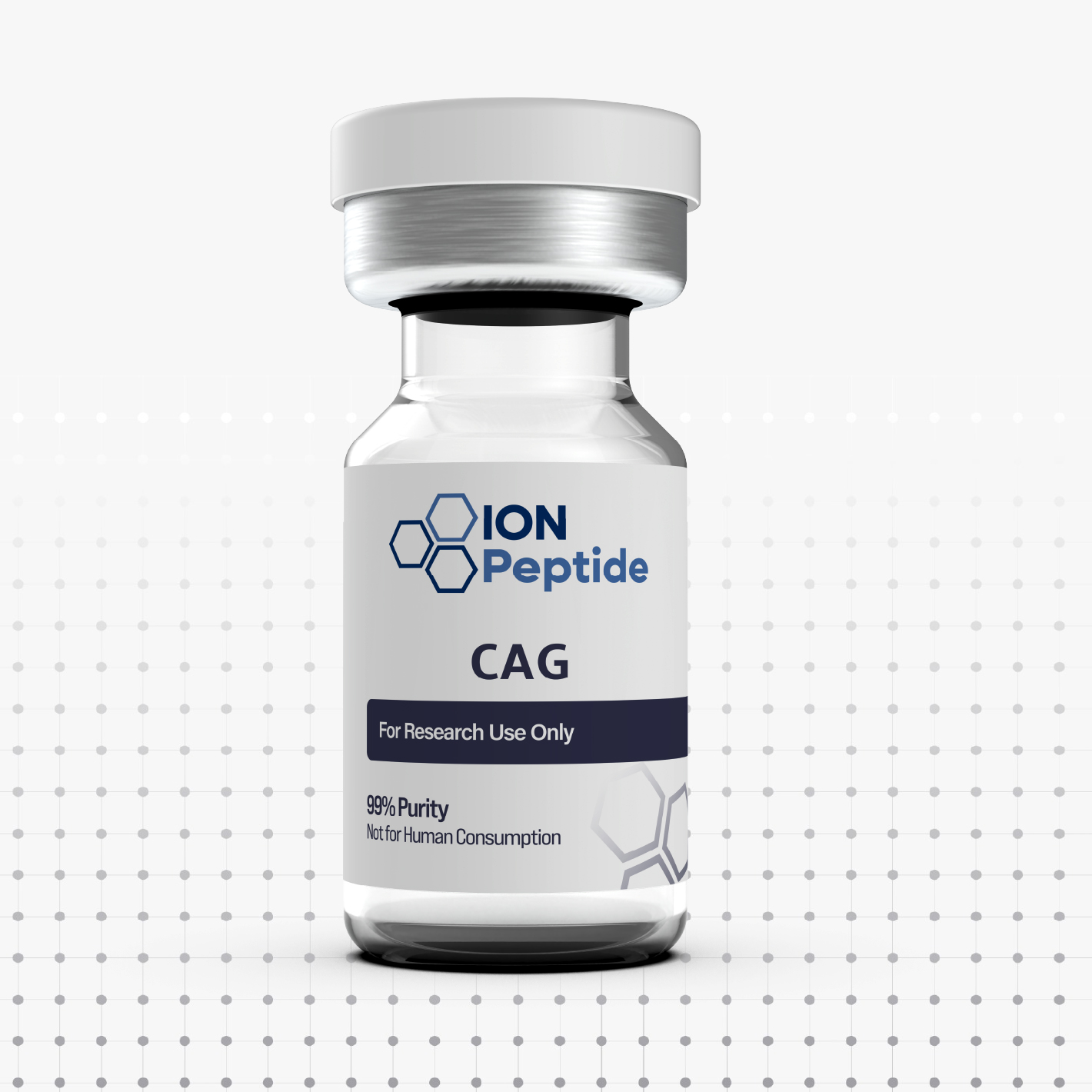


Buy (CAG) Cagrilintide Online
Buy (CAG) Cagrilintide Online. Peptide science has become one of the fastest-growing areas in biotechnology and molecular biology. Researchers continue to investigate peptide compounds because of their ability to influence cellular communication, hormonal signalling, and physiological regulation. Among the newer compounds that have attracted scientific interest is Cagrilintide (CAG), an investigational peptide studied for its interactions with appetite-related signalling pathways and metabolic biology.
Cagrilintide belongs to a class of compounds known as amylin analogues. Scientists are investigating these compounds because they provide valuable insights into how the body regulates energy balance, signalling pathways, and communication between organs and the central nervous system.
As research into peptide biology and metabolic regulation expands, Cagrilintide has become an increasingly important topic in endocrinology and biotechnology research.
This educational article explores the science behind Cagrilintide (CAG), its molecular characteristics, areas of scientific investigation, and why it continues to attract attention in modern peptide research.
What Is Cagrilintide?
Cagrilintide is a long-acting synthetic analogue of amylin, a naturally occurring peptide hormone that is co-secreted with insulin by the pancreas.
Amylin plays an important role in biological signalling related to:
- Energy balance
- Gastrointestinal communication
- Hormonal coordination
- Metabolic regulation
- Appetite-related pathways
Researchers developed Cagrilintide to investigate these signalling pathways in greater detail and to better understand the biology of metabolic regulation.
Because it is structurally modified compared to natural amylin, Cagrilintide exhibits unique properties that make it valuable for scientific investigation.
Understanding Amylin
To understand Cagrilintide, it is important to understand the hormone amylin.
Amylin is a peptide hormone that works alongside insulin and participates in communication between several physiological systems.
Scientists study amylin because it contributes to:
- Endocrine signaling
- Metabolic communication
- Brain-gut interactions
- Hormonal regulation
- Energy homeostasis
The study of amylin has become increasingly important as researchers seek to better understand complex metabolic systems.
Synthetic analogues such as Cagrilintide provide researchers with valuable tools for exploring these biological processes.
The Molecular Structure of Cagrilintide
The molecular structure of a peptide often determines its biological behaviour.
Researchers investigate several characteristics of Cagrilintide, including:
Amino Acid Composition
The arrangement of amino acids influences receptor interactions and signalling pathways.
Structural Modifications
Specific modifications contribute to the peptide’s stability and experimental properties.
Molecular Stability
Scientists study how the peptide behaves under laboratory conditions.
Receptor Biology
Researchers examine interactions between the peptide and various biological receptors.
Understanding these characteristics helps scientists better understand how peptides function within complex biological systems.
Why Researchers Study Cagrilintide
Scientists continue to investigate Cagrilintide because it provides opportunities to better understand:
Metabolic Signaling
How hormones communicate with various organs and tissues.
Endocrine Regulation
Interactions among signalling molecules and regulatory pathways.
Energy Homeostasis
The biological mechanisms that contribute to maintaining balance within the body.
Hormonal Communication
How peptides coordinate complex physiological processes.
Systems Biology
The integration of multiple signalling pathways within living organisms.
The breadth of these research areas has contributed significantly to the scientific interest in Cagrilintide.
Peptides and Biological Communication
Peptides are short chains of amino acids that often function as signalling molecules.
Researchers investigate peptides because they participate in:
- Cellular communication
- Hormonal signaling
- Molecular regulation
- Protein interactions
- Physiological coordination
The ability of peptides to influence signalling pathways has made them essential tools in biotechnology and molecular research.
Cagrilintide represents one example of how synthetic peptides can help scientists investigate complex biological systems.
The Importance of Metabolic Research
Metabolism is one of the most complex areas of human physiology.
Researchers investigate metabolic biology because it involves interactions among:
- Hormones
- Organs
- Signaling molecules
- Neural pathways
- Cellular networks
Understanding these interactions is essential for advancing knowledge in endocrinology and systems biology.
Peptides such as Cagrilintide have become valuable tools in this research.
Cagrilintide and Endocrine Research
The endocrine system relies on highly organised communication networks.
Scientists investigate how peptides participate in:
Signal Transmission
Communication between tissues and organs.
Receptor Activity
Interactions between signalling molecules and cellular receptors.
Hormonal Coordination
Maintaining biological organisation.
Regulatory Networks
Understanding how complex signalling systems function.
Research involving Cagrilintide contributes to a broader understanding of these mechanisms.
Applications in Scientific Research
Cagrilintide has been investigated across several scientific disciplines.
Endocrinology
Studying hormonal communication pathways.
Molecular Biology
Understanding peptide signalling and receptor interactions.
Metabolic Biology
Investigating energy regulation and physiological coordination.
Biochemistry
Examining molecular mechanisms and protein interactions.
Biotechnology
Developing advanced analytical methods and research technologies.
These areas continue to expand as scientific knowledge advances.
Laboratory Technologies Used to Study Cagrilintide
Modern peptide research relies on sophisticated analytical techniques.
High-Performance Liquid Chromatography (HPLC)
Used to evaluate peptide purity and composition.
Mass Spectrometry
Provides molecular identification and characterisation.
Computational Modeling
Predicts molecular interactions and structural behaviour.
Biochemical Assays
Investigates receptor activity and signalling pathways.
Protein Analysis
Examines interactions among peptides and biological systems.
These technologies have significantly improved scientific understanding of peptide compounds.
The Importance of Quality Standards in Peptide Research
Reliable scientific investigations depend upon rigorous quality control procedures.
Researchers commonly evaluate:
Purity
Ensuring reproducible experimental results.
Identity Verification
Confirming molecular composition.
Stability
Assessing storage characteristics and consistency.
Documentation
Supporting transparency and scientific integrity.
Reproducibility
Maintaining reliable laboratory standards.
Quality assurance remains essential for meaningful peptide research.
Storage and Laboratory Handling
Proper handling procedures are important in research environments.
General laboratory recommendations often include:
- Following supplier instructions
- Maintaining recommended storage conditions
- Preventing contamination
- Using validated laboratory techniques
- Monitoring stability during storage
Researchers should always follow institutional guidelines and laboratory protocols.
Future Directions in Cagrilintide Research
Scientific interest in Cagrilintide continues to grow.
Future research may focus on:
Advanced Metabolic Biology
Understanding increasingly complex signalling networks.
Systems Biology
Investigating interactions among biological pathways.
Computational Research
Modelling peptide interactions and receptor activity.
Biotechnology Innovation
Developing improved analytical methods and technologies.
Endocrine Science
Expanding knowledge regarding hormonal communication systems.
As scientific understanding evolves, researchers are expected to continue investigating how synthetic peptides influence complex physiological pathways.
Why Peptide Research Matters
Peptide science has become an essential component of modern biotechnology.
Researchers increasingly recognise peptides as valuable tools for studying:
- Cellular communication
- Hormonal signaling
- Molecular regulation
- Protein interactions
- Complex biological systems
The continued interest in Cagrilintide reflects the growing importance of peptide science in understanding the mechanisms that regulate physiological function.
Conclusion
Cagrilintide (CAG) remains an important subject in peptide and metabolic research. As a synthetic analogue of the naturally occurring hormone amylin, it provides researchers with opportunities to investigate signalling pathways, endocrine communication, and complex biological systems.
Although many questions remain regarding its broader mechanisms and applications, Cagrilintide continues to contribute to scientific understanding of peptide biology and metabolic regulation.
For more information about peptide-related research topics:
Website: https://ionpeptides.store/
WhatsApp: +1 (318) 341-5522
Email: support@ionpeptides.online
Related products


All

All