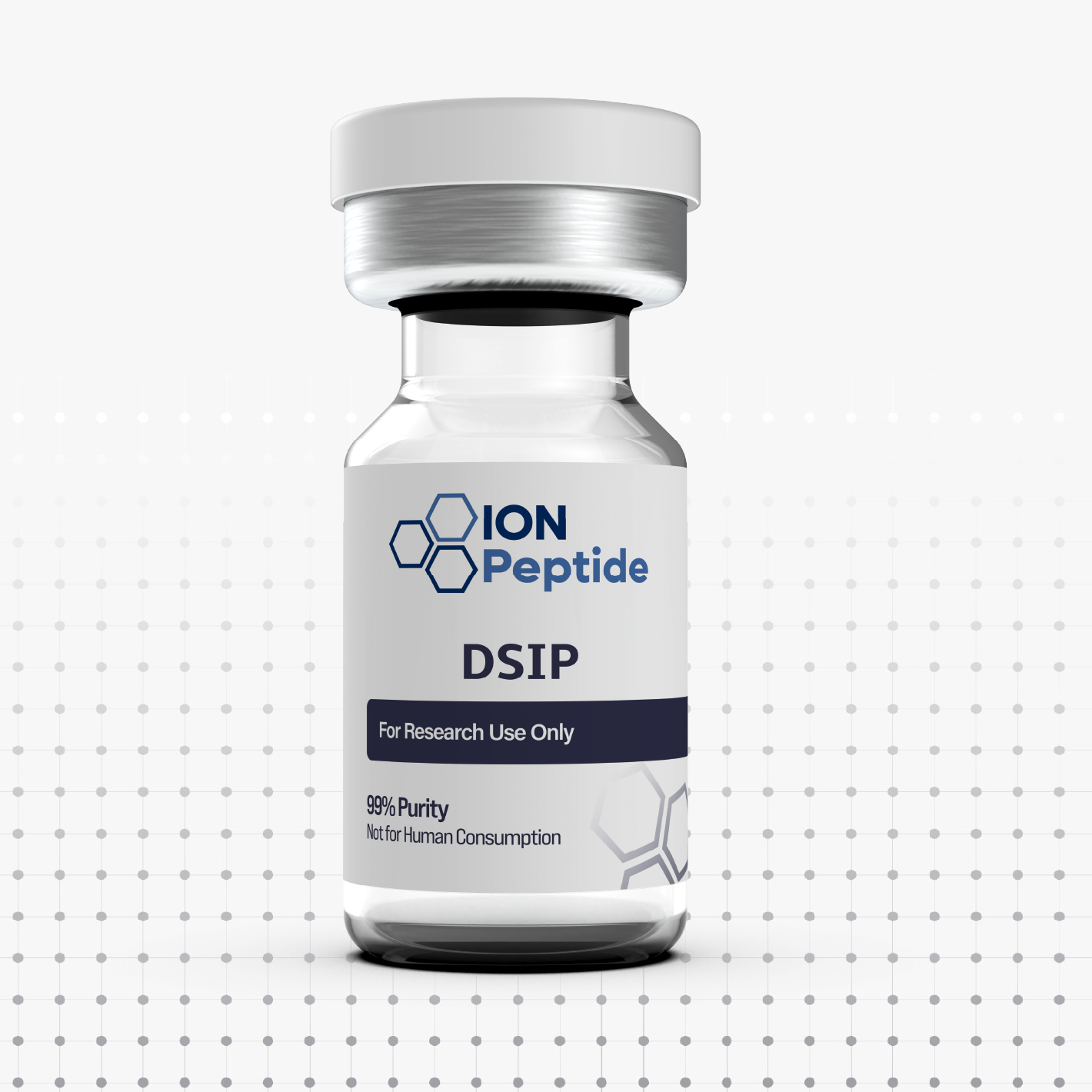


Buy DSIP Online
Buy DSIP Online. The field of peptide research has expanded dramatically in recent years, with scientists investigating naturally occurring peptides that influence cellular communication, neurobiology, and physiological regulation. One peptide that has generated decades of scientific interest is DSIP, short for Delta Sleep-Inducing Peptide.
DSIP is a naturally occurring neuropeptide that was first isolated during research into sleep and brain activity in the 1970s. Since its discovery, researchers have investigated its potential involvement in sleep architecture, stress regulation, neuroendocrine signalling, and broader physiological processes. Despite nearly fifty years of study, DSIP remains one of the most intriguing and least fully understood peptides in neuroscience.
Because of its unique characteristics and broad research potential, DSIP continues to attract interest among scientists studying sleep biology, circadian rhythms, and peptide signalling.
This educational article explores the science behind DSIP, its molecular characteristics, areas of scientific investigation, and why it remains an important topic in peptide research.
What Is DSIP?
DSIP stands for Delta Sleep-Inducing Peptide, a naturally occurring peptide composed of nine amino acids.
Its amino acid sequence is:
Trp-Ala-Gly-Gly-Asp-Ala-Ser-Gly-Glu
Researchers classify DSIP as a nonapeptide, meaning it contains nine amino acids linked together by peptide bonds. The peptide was originally isolated from the cerebral venous blood of rabbits during experiments involving slow-wave sleep and delta-wave activity.
Although it was initially identified because of its relationship to sleep, subsequent research has suggested that DSIP may participate in a much broader range of biological activities.
The Discovery of DSIP
The discovery of DSIP represented an important milestone in neuroscience and sleep research.
Swiss researchers investigating sleep physiology identified a small peptide that appeared to influence delta-wave brain activity. Delta waves are associated with the deepest stages of non-rapid eye movement sleep, often referred to as slow-wave sleep.
Since then, researchers have studied DSIP in numerous experimental models to better understand its biological functions and signalling mechanisms.
Understanding Peptides
Peptides are short chains of amino acids that function as important signalling molecules within the body.
Scientists study peptides because they participate in:
- Cellular communication
- Neurotransmission
- Hormonal regulation
- Molecular signaling
- Physiological coordination
- Protein interactions
Peptides help researchers understand how biological systems communicate and respond to internal and external conditions.
DSIP has become particularly valuable because it appears to influence multiple physiological pathways simultaneously.
The Molecular Structure of DSIP
The molecular properties of DSIP contribute significantly to its scientific interest.
Researchers investigate:
Amino Acid Composition
The sequence of nine amino acids determines how DSIP interacts with biological systems.
Molecular Stability
Scientists study how the peptide behaves under laboratory conditions.
Neurobiological Activity
Researchers investigate interactions between DSIP and various signalling pathways.
Structure-Function Relationships
Understanding how molecular structure influences biological activity remains one of the primary goals of peptide science.
DSIP has a molecular weight of approximately 848.82 g/mol, making it a relatively small neuropeptide.
How Researchers Believe DSIP Works
One of the most fascinating aspects of DSIP research is that its precise mechanism of action remains incompletely understood.
Studies suggest that DSIP may interact with several biological systems, including:
- GABAergic pathways
- Opioid signalling pathways
- Neuroendocrine regulation
- Hypothalamic signaling
- Stress-response pathways
Rather than acting through a single receptor, researchers believe DSIP may influence multiple signalling networks simultaneously.
This complexity has made DSIP a particularly interesting subject in neuroscience.
DSIP and Sleep Research
The name Delta Sleep-Inducing Peptide originates from its association with delta-wave sleep, the deepest phase of non-REM sleep.
Researchers have investigated DSIP in studies involving:
- Sleep architecture
- Slow-wave sleep
- Circadian biology
- Sleep regulation
- Neurophysiology
Some early studies suggested that DSIP may influence the quality and organisation of sleep rather than acting as a conventional sedative. However, findings across studies have been mixed, and researchers continue to investigate its precise role.
DSIP and Stress Research
Beyond sleep science, DSIP has also been explored in research involving stress and neuroendocrine regulation.
Scientists investigate its relationship with:
Hypothalamic-Pituitary-Adrenal (HPA) Axis
Studying stress-related signalling pathways.
Neuroendocrine Communication
Understanding interactions between the nervous and endocrine systems.
Biological Adaptation
Exploring how organisms respond to environmental challenges.
Circadian Regulation
Investigating relationships between stress and biological rhythms.
These research areas continue to generate interest among neuroscientists and physiologists.
Applications in Scientific Research
DSIP has been investigated across numerous scientific disciplines.
Neuroscience
Studying brain signalling and sleep regulation.
Chronobiology
Examining biological rhythms and timing mechanisms.
Endocrinology
Investigating hormonal communication pathways.
Molecular Biology
Understanding peptide signalling and cellular interactions.
Stress Physiology
Exploring mechanisms involved in biological adaptation.
The diversity of these research applications has contributed to DSIP’s enduring scientific relevance.
Laboratory Technologies Used to Study DSIP
Modern peptide science relies on advanced analytical techniques.
High-Performance Liquid Chromatography (HPLC)
Used to evaluate purity and composition.
Mass Spectrometry
Provides molecular identification and characterisation.
Computational Modeling
Predicts molecular interactions and structural behaviour.
Biochemical Assays
Investigates signalling pathways and biological activity.
Neurophysiological Analysis
Studies brain activity and peptide interactions.
These technologies have significantly improved our understanding of peptide biology.
The Importance of Quality Standards
Reliable peptide research depends on rigorous quality control.
Researchers commonly evaluate:
Purity
Ensuring reproducible results.
Identity Verification
Confirming molecular composition.
Stability
Assessing storage characteristics and consistency.
Documentation
Supporting transparency and scientific integrity.
Reproducibility
Maintaining reliable experimental conditions.
High-quality materials remain essential for meaningful scientific investigation.
Storage and Laboratory Handling
Proper handling procedures are important in research environments.
General laboratory recommendations often include:
- Following supplier instructions
- Maintaining recommended storage conditions
- Avoiding contamination
- Using appropriate laboratory procedures
- Monitoring material stability
Researchers should always follow institutional protocols and laboratory guidelines.
Future Directions in DSIP Research
Scientific interest in DSIP continues to expand.
Future research may focus on:
Advanced Neuroscience
Understanding increasingly complex signalling pathways.
Systems Biology
Investigating interactions among biological networks.
Circadian Biology
Studying mechanisms governing biological timing.
Stress Physiology
Exploring adaptation and resilience pathways.
Biotechnology Innovation
Developing improved research technologies and analytical methods.
As scientific knowledge grows, researchers are expected to continue investigating this unique neuropeptide and its broader biological significance.
Why Peptide Research Matters
Peptide science has become one of the most dynamic areas of biotechnology.
Researchers increasingly recognise peptides as valuable tools for studying:
- Cellular communication
- Neurobiology
- Molecular regulation
- Hormonal signaling
- Complex physiological systems
The continued interest in DSIP reflects the growing importance of peptide science in understanding the mechanisms that regulate biological function and communication.
Conclusion
DSIP, or Delta Sleep-Inducing Peptide, remains one of the most fascinating peptides in neuroscience research. First discovered during investigations into slow-wave sleep, this naturally occurring nonapeptide continues to attract scientific attention because of its relationship to sleep biology, stress physiology, and neuroendocrine signalling.
Although many questions remain regarding its precise mechanisms and broader biological functions, DSIP continues to provide researchers with valuable insights into complex physiological systems and peptide communication networks.
For more information about peptide-related research topics:
Website: https://ionpeptides.store/
WhatsApp: +1 (318) 341-5522
Email: support@ionpeptides.online
Related products