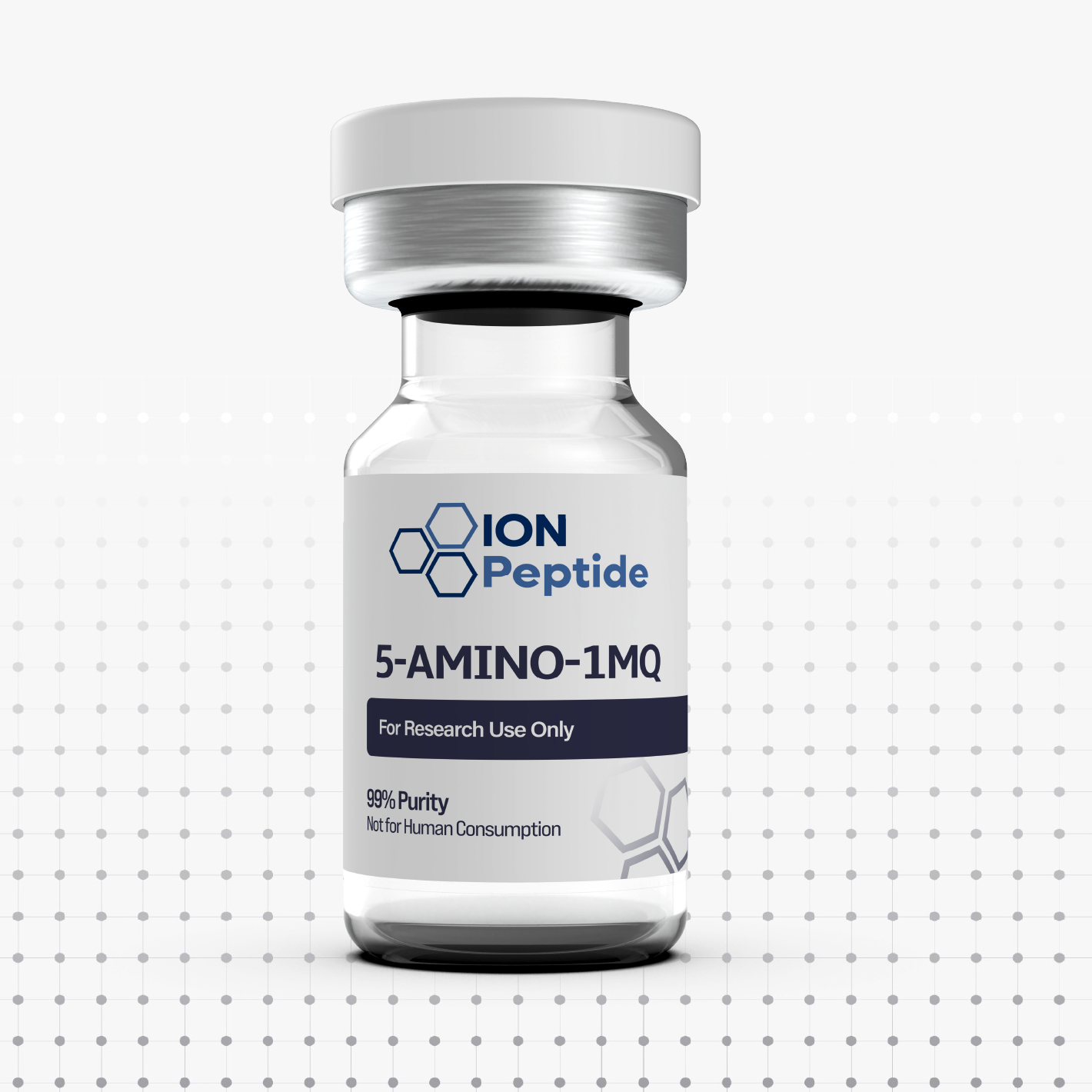

Buy 5-Amino 1MQ Online
Buy 5-Amino 1MQ Online. The field of metabolic research has expanded rapidly over the past decade, leading scientists to investigate new molecular targets involved in energy balance, cellular metabolism, and mitochondrial function. One experimental compound that has attracted considerable scientific attention is 5-Amino-1MQ. Although it is frequently discussed alongside peptide research compounds, 5-Amino-1MQ is not a peptide. Instead, it is a synthetic small molecule designed to inhibit the enzyme nicotinamide N-methyltransferase (NNMT), an enzyme involved in nicotinamide metabolism and cellular energy regulation. Current evidence comes largely from laboratory and animal studies, and additional research is needed to determine its safety and effectiveness in humans.
Researchers continue to investigate 5-Amino-1MQ because NNMT has emerged as an important area of study in metabolic biology. Experimental findings suggest that inhibiting NNMT may influence NAD⁺ metabolism, mitochondrial activity, and cellular energy pathways under laboratory conditions. These observations have generated interest within molecular biology, biochemistry, and biotechnology research.
This educational guide explains the science behind 5-Amino-1MQ, including its molecular characteristics, mechanism of action, research applications, and why it continues to be studied in experimental settings.
What Is 5-Amino-1MQ?
5-Amino-1MQ, also known as 5-amino-1-methylquinolinium, is a synthetic small-molecule NNMT inhibitor. Unlike peptides, which are composed of amino acid chains, 5-Amino-1MQ belongs to the quinolinium class of organic compounds. It was developed as a research tool to help scientists better understand the role of NNMT in cellular metabolism.
Researchers investigate 5-Amino-1MQ because of its relationship to:
- Cellular metabolism
- NAD⁺ biology
- Energy homeostasis
- Mitochondrial research
- Molecular signaling
- Metabolic regulation
Its unique mechanism has made it an important experimental compound in laboratory research.
Understanding NNMT
NNMT (nicotinamide N-methyltransferase) is an enzyme involved in the metabolism of nicotinamide, a form of vitamin B3.
Researchers study NNMT because it participates in:
- Nicotinamide metabolism
- NAD⁺ salvage pathways
- Methylation reactions
- Cellular energy balance
- Metabolic regulation
Laboratory studies suggest that increased NNMT activity may alter cellular metabolism in certain tissues, making it a target for further scientific investigation.
How 5-Amino-1MQ Works
Current research indicates that 5-Amino-1MQ acts by inhibiting NNMT.
Scientists are investigating whether this inhibition may:
Preserve Nicotinamide
Reducing NNMT activity may leave more nicotinamide available for NAD⁺ synthesis.
Support NAD⁺ Biology
NAD⁺ is a coenzyme involved in numerous metabolic reactions.
Influence Cellular Energy
Researchers continue studying how NNMT inhibition affects cellular energy pathways.
Affect Mitochondrial Function
Mitochondria remain a major focus of experimental metabolism research.
These mechanisms are still being investigated, and most supporting evidence comes from preclinical studies.
Understanding NAD⁺
NAD⁺ (Nicotinamide Adenine Dinucleotide) is an essential coenzyme found in every living cell.
Researchers investigate NAD⁺ because it participates in:
- Cellular respiration
- Energy production
- DNA repair
- Enzyme activity
- Mitochondrial function
Understanding NAD⁺ metabolism has become one of the most active areas of modern molecular biology.
Why Researchers Study 5-Amino-1MQ
Scientists continue investigating this compound because it provides opportunities to better understand several biological systems.
Research areas include:
Metabolic Biology
Studying cellular energy regulation.
Molecular Biology
Understanding protein and enzyme interactions.
Biochemistry
Investigating metabolic pathways.
Mitochondrial Research
Exploring cellular energy production.
Systems Biology
Examining communication among interconnected biological networks.
These research fields continue to evolve as scientific knowledge expands.
Molecular Characteristics
Several structural properties distinguish 5-Amino-1MQ from peptide compounds.
Small-Molecule Structure
Unlike peptides, 5-Amino-1MQ is a low-molecular-weight organic compound.
Membrane Permeability
Researchers investigate how it interacts with cellular environments.
Enzyme Selectivity
Its design focuses on selective inhibition of NNMT.
Molecular Stability
Scientists study how the compound behaves under controlled laboratory conditions.
These characteristics contribute to its value as a research tool.
Applications in Scientific Research
5-Amino-1MQ is being investigated across several scientific disciplines.
Molecular Biology
Studying enzyme regulation and signalling pathways.
Biochemistry
Understanding nicotinamide metabolism.
Biotechnology
Developing new analytical methods.
Metabolic Research
Exploring mechanisms related to cellular energy.
Computational Biology
Modelling enzyme–compound interactions.
These applications continue to contribute to expanding scientific knowledge.
Laboratory Technologies Used
Modern research involving 5-Amino-1MQ depends on advanced analytical methods.
High-Performance Liquid Chromatography (HPLC)
Used to assess purity and composition.
Mass Spectrometry
Confirms molecular identity.
Cell Culture Studies
Investigate compound behaviour in laboratory models.
Computational Modeling
Predicts molecular interactions.
Enzyme Assays
Evaluate NNMT activity under experimental conditions.
These technologies support reliable and reproducible scientific research.
Importance of Quality Standards
Reliable laboratory investigations depend on rigorous quality control.
Researchers commonly evaluate:
Purity
Ensuring consistent analytical results.
Identity Verification
Confirming molecular composition.
Stability
Assessing long-term storage characteristics.
Documentation
Supporting transparency and reproducibility.
Manufacturing Quality
Following recognised laboratory standards.
Quality assurance remains fundamental to meaningful scientific investigation.
Storage and Laboratory Handling
Proper handling helps preserve research materials.
General laboratory recommendations include:
- Follow the manufacturer’s storage instructions.
- Protect materials from excessive heat and moisture.
- Prevent contamination.
- Use validated laboratory procedures.
- Maintain accurate documentation.
Researchers should always follow institutional laboratory protocols.
Future Directions in Research
Scientific interest in 5-Amino-1MQ continues to grow.
Future investigations may include:
Advanced Metabolic Biology
Understanding complex enzyme networks.
NAD⁺ Research
Exploring cellular energy regulation.
Biotechnology
Developing improved analytical tools.
Systems Biology
Studying interactions among metabolic pathways.
Computational Science
Modelling enzyme inhibition and molecular behaviour.
Continued research will help clarify the biological significance of NNMT inhibition.
Why This Research Matters
Research into compounds such as 5-Amino-1MQ contributes to a broader understanding of:
- Cellular metabolism
- Molecular biology
- Enzyme regulation
- Mitochondrial function
- Biotechnology
- Systems biology
These investigations help scientists better understand the complex mechanisms that regulate cellular energy and metabolic processes.
Conclusion
5-Amino-1MQ is an experimental small-molecule NNMT inhibitor, not a peptide, that has become an important research tool in studies of metabolism, NAD⁺ biology, and cellular energy regulation. While laboratory and animal studies have provided valuable insights into its mechanism, human clinical evidence remains limited, and the compound is considered investigational rather than an approved therapeutic agent.
As scientific understanding of metabolism and enzyme biology continues to advance, 5-Amino-1MQ is expected to remain an important subject of laboratory research and biotechnology innovation.
For more information about research products and educational resources:
Website: https://ionpeptides.store/
WhatsApp: +1 (318) 341-5522
Email: support@ionpeptides.online
Related products