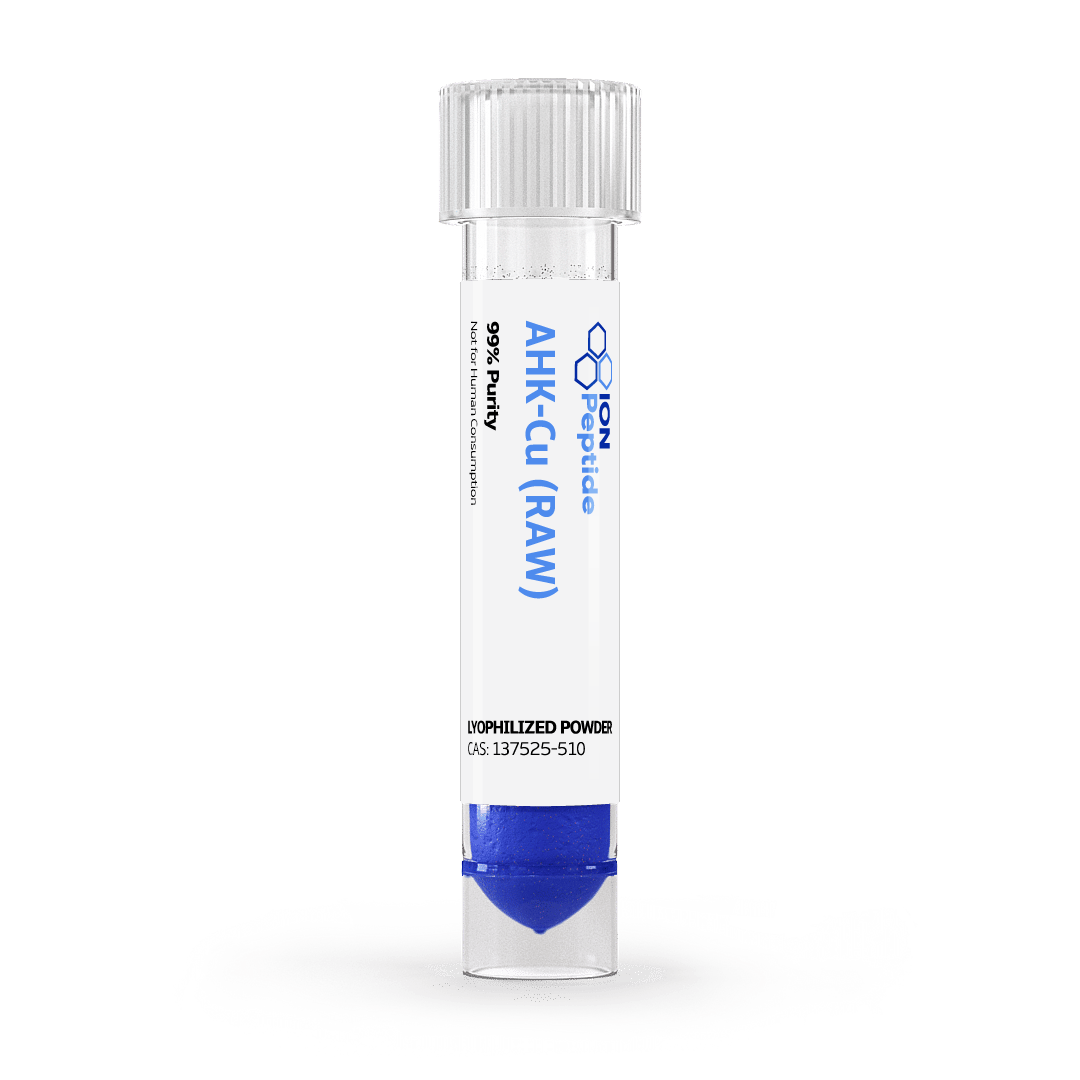
Buy AHK-CU Raw 1g Online
Buy AHK-CU Raw 1g Online. Peptide science has become one of the fastest-growing fields in biotechnology, cosmetic chemistry, and molecular biology. Among the copper-binding peptides currently being investigated, AHK-Cu, also known as Copper Tripeptide-3, has gained attention because of its unique molecular structure and its interaction with copper ions. Researchers continue to study this synthetic peptide in laboratory and cosmetic research settings to better understand cellular signalling, protein interactions, and skin and hair biology.
AHK-Cu Raw 1g generally refers to a bulk research-grade powder intended for laboratory analysis, formulation development, and other in vitro scientific investigations. High-purity raw materials allow researchers to evaluate peptide stability, compatibility, and analytical characteristics under controlled conditions. Research suppliers typically specify that these materials are intended for laboratory research only and are not approved for human or veterinary use.
This educational article explores the science behind AHK-Cu Raw 1g, including its molecular characteristics, cosmetic research applications, laboratory handling, and why copper peptides continue to be an important area of scientific investigation.
What Is AHK-Cu?
AHK-Cu is a synthetic copper-binding tripeptide composed of three amino acids:
- Alanine
- Histidine
- Lysine
These amino acids form a stable complex with a copper ion (Cu²⁺), creating what is commonly referred to as Copper Tripeptide-3. Structurally, AHK-Cu is closely related to the better-known GHK-Cu peptide but differs by one amino acid, which may influence its biological behaviour. Researchers emphasise that findings for GHK-Cu should not automatically be assumed to apply to AHK-Cu because they are distinct molecules.
What Does “Raw 1g” Mean?
The term Raw 1g indicates that the peptide is supplied as a bulk laboratory material rather than as a finished cosmetic or pharmaceutical product.
Research-grade raw peptides are commonly used for:
- Analytical testing
- Cosmetic formulation development
- Laboratory experiments
- Stability studies
- Method validation
- Biotechnology research
Raw materials enable researchers to prepare experimental formulations while maintaining control over concentration and composition.
Understanding Copper Peptides
Copper peptides are small amino acid chains capable of binding copper ions.
Scientists investigate copper peptides because copper plays an important role in numerous biochemical processes involving enzymes and cellular communication.
Research involving copper peptides contributes to studies of:
- Protein interactions
- Molecular signaling
- Cellular communication
- Cosmetic ingredient technology
- Biotechnology
Copper peptide research continues to expand as scientists investigate how peptide–metal complexes interact with biological systems.
Molecular Characteristics of AHK-Cu
Several structural properties make AHK-Cu an interesting molecule for scientific investigation.
Tripeptide Structure
AHK-Cu contains three amino acids arranged in a defined sequence that supports copper binding.
Copper Chelation
The peptide forms a stable complex with copper ions, allowing researchers to study copper transport and molecular interactions.
Water Solubility
AHK-Cu can be incorporated into aqueous laboratory formulations under appropriate research conditions.
Molecular Stability
Scientists investigate how temperature, pH, and storage conditions affect peptide integrity.
These characteristics make AHK-Cu useful in laboratory studies focused on peptide chemistry and formulation science.
Why Researchers Study AHK-Cu
AHK-Cu continues to receive scientific attention because it provides opportunities to investigate multiple biological systems.
Current research areas include:
Skin Biology
Laboratory studies examine interactions between AHK-Cu and cultured skin cells.
Hair Follicle Research
Some preclinical work has explored effects on dermal papilla cells and hair follicle biology, although human clinical evidence remains very limited.
Protein Interactions
Researchers study how copper peptides interact with extracellular proteins.
Cosmetic Formulation
Scientists evaluate ingredient compatibility, stability, and formulation performance.
Molecular Biology
Understanding peptide-mediated cellular communication remains an active research area.
Applications in Cosmetic Research
AHK-Cu is primarily discussed within cosmetic and laboratory research rather than approved medical applications.
Areas of investigation include:
Cosmetic Chemistry
Developing peptide-containing topical formulations.
Biotechnology
Exploring peptide engineering and delivery systems.
Molecular Biology
Studying protein signalling pathways.
Cell Biology
Investigating communication between cells.
Biochemistry
Examining copper-dependent molecular processes.
These research disciplines continue to contribute to advances in peptide science.
Laboratory Technologies Used to Study AHK-Cu
Modern peptide research depends on advanced analytical techniques.
High-Performance Liquid Chromatography (HPLC)
Used to evaluate purity and batch consistency.
Mass Spectrometry
Confirms molecular identity and composition.
Cell Culture Studies
Investigate peptide interactions under controlled laboratory conditions.
Computational Modeling
Predicts molecular behaviour and structural interactions.
Stability Testing
Evaluates peptide performance during storage and formulation.
These technologies improve reproducibility and scientific reliability.
Quality Standards for Research Materials
Reliable scientific research depends on rigorous quality control.
Researchers commonly evaluate:
Purity
Ensuring batch consistency.
Identity Verification
Confirming molecular composition.
Stability
Assessing long-term storage characteristics.
Documentation
Supporting transparency and reproducibility.
Manufacturing Quality
Following established quality-control procedures.
Many research suppliers also provide analytical documentation such as Certificates of Analysis (COAs) for research materials.
Storage and Laboratory Handling
Proper laboratory handling helps preserve peptide quality.
General recommendations include:
- Store according to the manufacturer’s guidance.
- Protect from excessive heat, light, and moisture.
- Keep containers tightly sealed.
- Avoid unnecessary contamination during handling.
- Use validated laboratory procedures.
Researchers should always follow institutional protocols and applicable laboratory safety standards.
Future Directions in AHK-Cu Research
Scientific interest in AHK-Cu continues to expand.
Future investigations may include:
Advanced Cosmetic Biotechnology
Developing improved topical peptide formulations.
Peptide Engineering
Designing next-generation copper peptide molecules.
Molecular Signaling
Understanding peptide-mediated communication pathways.
Computational Biology
Modelling peptide–protein interactions.
Formulation Science
Improving stability and compatibility in cosmetic research.
Continued laboratory research will help clarify the biological properties of this synthetic copper peptide.
Why Copper Peptide Research Matters
Copper peptide research contributes to a broader understanding of:
- Cellular communication
- Molecular biology
- Protein interactions
- Cosmetic science
- Biotechnology
- Peptide engineering
AHK-Cu is one example of how synthetic peptides can help researchers explore complex biochemical systems while advancing cosmetic and laboratory science.
Conclusion
AHK-Cu Raw 1g remains an important material for cosmetic and laboratory research because of its unique copper-binding tripeptide structure and its value in formulation development, analytical testing, and peptide science. Current research is largely preclinical and cosmetic in nature, and AHK-Cu is considered an investigational compound rather than an approved therapeutic product.
As biotechnology and peptide research continue to evolve, AHK-Cu is expected to remain a valuable subject for scientists investigating molecular signalling, protein interactions, and cosmetic ingredient innovation.
For more information about research products and educational resources:
Website: https://ionpeptides.store/
WhatsApp: +1 (318) 341-5522
Email: support@ionpeptides.online
Related products