Buy AHK-CU Peptide Online
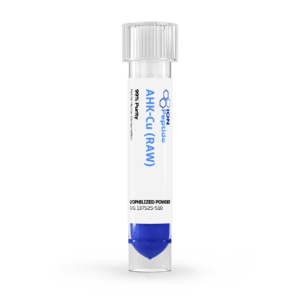
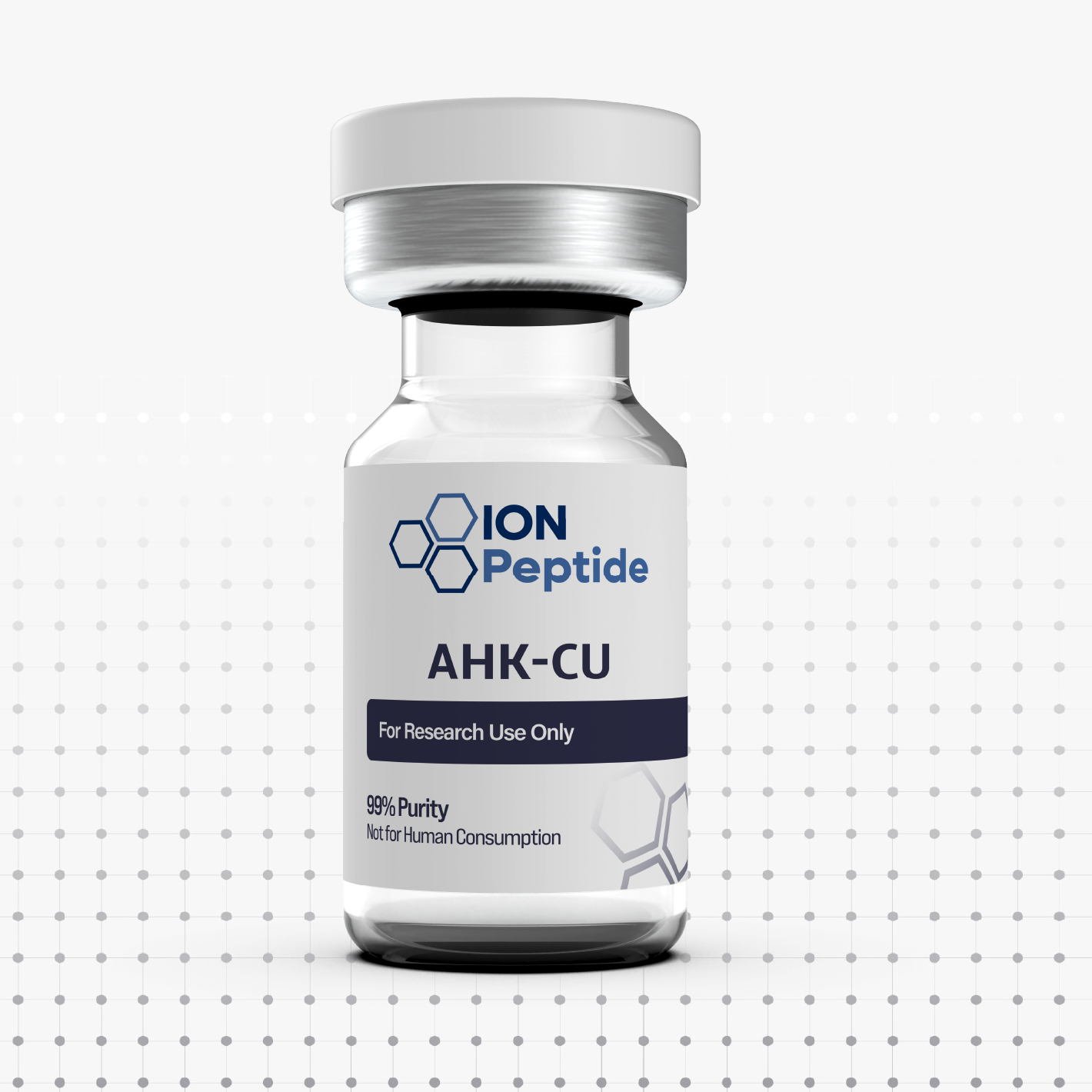
Buy AHK-CU Peptide Online. Research has become one of the fastest-growing areas of biotechnology, cosmetic science, and molecular biology. Among the many peptides currently being investigated, AHK-Cu Peptide, also known as Copper Tripeptide-3, has attracted attention for its unique chemical structure and its interaction with copper ions. Researchers continue to study this synthetic tripeptide because of its potential role in cellular signalling, skin biology, and hair follicle research. Current evidence is largely preclinical or cosmetic in nature, and AHK-Cu remains investigational rather than an approved therapeutic agent.
AHK-Cu belongs to a broader family of copper-binding peptides that are investigated for their biological activity and their ability to interact with proteins involved in tissue maintenance. Because copper is an essential trace mineral involved in numerous enzymatic reactions, scientists continue exploring how copper-peptide complexes influence cellular processes under laboratory conditions.
This educational guide explains the science behind AHK-Cu Peptide, its molecular characteristics, laboratory applications, and why it continues to be studied in cosmetic and biotechnology research.
What Is AHK-Cu Peptide?
AHK-Cu is a synthetic copper-binding tripeptide composed of the amino acids alanine, histidine, and lysine complexed with a copper ion. It is structurally related to the naturally occurring copper peptide GHK-Cu but differs by one amino acid, giving it distinct biochemical properties that researchers continue to investigate.
Scientists investigate AHK-Cu because it provides opportunities to study:
- Cellular communication
- Copper transport
- Protein interactions
- Cosmetic peptide technology
- Hair follicle biology
- Skin physiology
The peptide remains an active subject of laboratory and cosmetic research.
Understanding Copper Peptides
Copper peptides are small chains of amino acids capable of binding copper ions.
Researchers investigate copper peptides because copper is involved in numerous biological processes, including enzyme activity, connective tissue biology, and cellular signalling.
Copper peptide research contributes to understanding:
- Molecular signaling
- Protein interactions
- Cellular communication
- Extracellular matrix biology
- Cosmetic formulation science
These investigations continue to expand knowledge within biotechnology and cosmetic research.
Molecular Structure of AHK-Cu
The structure of AHK-Cu contributes significantly to its scientific interest.
Researchers study several characteristics.
Tripeptide Composition
AHK-Cu consists of three amino acids:
- Alanine
- Histidine
- Lysine
Copper Complex
The peptide binds a copper ion, creating a stable copper-peptide complex.
Molecular Stability
Scientists investigate how the compound behaves under different laboratory conditions.
Protein Affinity
Research continues to explore how the peptide interacts with proteins and cellular signalling pathways.
Why Researchers Study AHK-Cu
Scientific interest in AHK-Cu continues to increase because it serves as a useful model for studying peptide biology and cosmetic science.
Research areas include:
Hair Follicle Biology
Laboratory studies examine how AHK-Cu interacts with dermal papilla cells and hair follicle signaling pathways. Much of this work remains preclinical.
Skin Biology
Researchers investigate its interactions with fibroblasts and extracellular matrix components in laboratory models.
Molecular Signaling
Scientists continue exploring how copper peptides influence communication between cells.
Cosmetic Formulation
AHK-Cu is evaluated as a cosmetic ingredient in topical formulations.
Biotechnology
The peptide provides opportunities to investigate copper delivery and peptide engineering.
Understanding Cellular Communication
Cells communicate using complex networks of proteins, peptides, and signalling molecules.
Researchers investigate peptides because they participate in:
- Signal transmission
- Molecular recognition
- Cellular organization
- Biological regulation
- Protein communication
Understanding these systems contributes to advances in molecular biology and biotechnology.
Cosmetic Science and AHK-Cu
Copper peptides have become important ingredients in cosmetic research.
Scientists investigate AHK-Cu because of its compatibility with topical cosmetic formulations and its ability to interact with skin-related biological pathways under experimental conditions.
Research continues to focus on:
- Cosmetic ingredient development
- Skin surface biology
- Formulation stability
- Ingredient compatibility
- Cosmetic biotechnology
Although cosmetic use is an active area of investigation, evidence for therapeutic applications remains limited.
Applications in Scientific Research
AHK-Cu is investigated across several scientific disciplines.
Cosmetic Chemistry
Studying advanced skincare ingredients.
Biotechnology
Developing innovative peptide technologies.
Molecular Biology
Understanding protein interactions and signalling pathways.
Cell Biology
Investigating communication among cells.
Biochemistry
Exploring copper-dependent biochemical processes.
These research fields continue to evolve as peptide science advances.
Laboratory Technologies Used to Study AHK-Cu
Modern peptide research depends upon advanced laboratory techniques.
High-Performance Liquid Chromatography (HPLC)
Used to evaluate purity and composition.
Mass Spectrometry
Confirms molecular identity.
Cell Culture Research
Investigates peptide behaviour in controlled laboratory systems.
Computational Modeling
Predicts molecular interactions.
Protein Analysis
Examines peptide-protein relationships.
These technologies contribute to reliable scientific investigations.
Importance of Quality Standards
Reliable research depends upon consistent quality control.
Researchers evaluate:
Purity
Ensuring reproducible experimental results.
Identity Verification
Confirming molecular composition.
Stability
Assessing storage performance.
Documentation
Supporting scientific transparency.
Manufacturing Consistency
Maintaining reliable laboratory standards.
Quality assurance remains essential throughout peptide research.
Storage and Laboratory Handling
Proper laboratory handling helps preserve peptide integrity.
General recommendations include:
- Following the manufacturer’s storage instructions
- Protecting from excessive heat and light
- Preventing contamination
- Using validated laboratory procedures
- Monitoring product stability
Researchers should always follow established laboratory protocols.
Future Directions in AHK-Cu Research
Scientific interest in AHK-Cu continues to expand.
Future investigations may include:
Advanced Cosmetic Biotechnology
Developing improved topical peptide formulations.
Molecular Biology
Understanding receptor interactions and signalling mechanisms.
Peptide Engineering
Designing next-generation copper peptides.
Computational Biology
Modelling peptide behaviour and protein interactions.
Skin and Hair Research
Exploring biological pathways relevant to cosmetic science.
Continued research will help clarify the biological properties and potential applications of this synthetic copper peptide.
Why Copper Peptide Research Matters
Copper peptide research contributes to a broader understanding of:
- Cellular communication
- Molecular regulation
- Protein interactions
- Cosmetic science
- Biotechnology
- Skin and hair biology
AHK-Cu represents one example of how peptide engineering continues to expand scientific knowledge across multiple disciplines.
Conclusion
AHK-Cu Peptide remains an important subject in cosmetic and biotechnology research because of its engineered tripeptide structure and copper-binding properties. Scientists continue investigating its interactions with cellular signalling pathways, protein biology, and cosmetic formulations, particularly in laboratory models related to skin and hair biology. While early findings are encouraging for further study, clinical evidence remains limited, and the peptide is still considered investigational.
As peptide science advances, AHK-Cu is expected to remain an important research tool for exploring copper-peptide chemistry, molecular communication, and cosmetic biotechnology.
For more information about research products and educational resources:
Website: https://ionpeptides.store/
WhatsApp: +1 (318) 341-5522
Email: support@ionpeptides.online
Related products
All