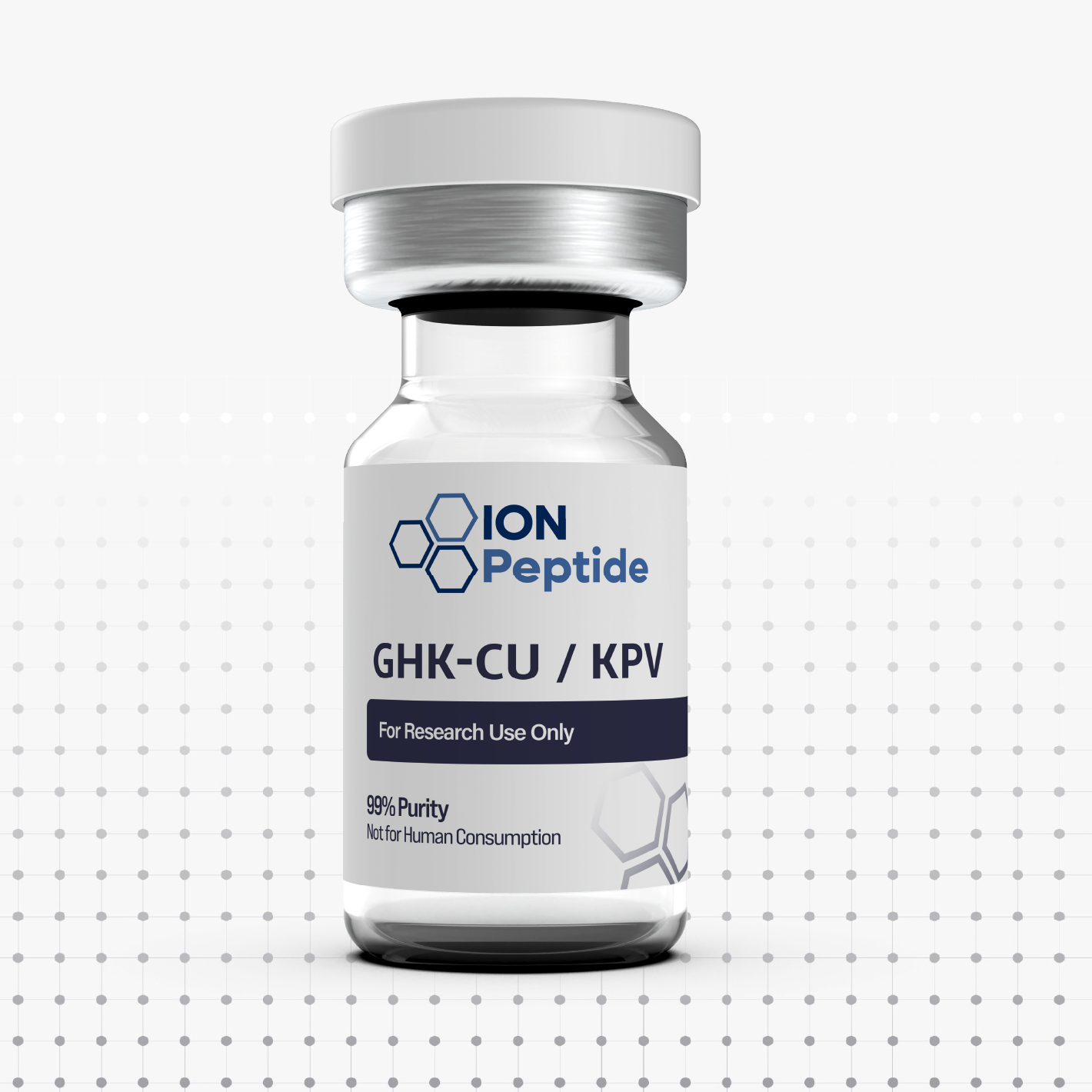
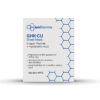
Buy GHK-Cu/KPV 10mg Online
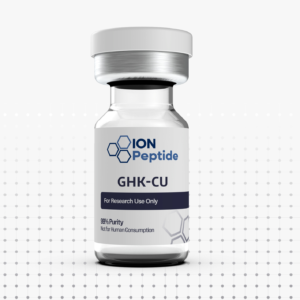
Buy GHK-Cu/KPV 10mg Online. Peptide science has become one of the most exciting and rapidly growing fields in biotechnology and molecular research. Scientists continue to investigate naturally occurring and synthetic peptides because of their potential roles in cellular signalling, molecular communication, and biological regulation. Among the peptides that have gained significant attention in research communities are GHK-Cu (Copper Tripeptide-1) and KPV, two compounds that have been studied individually and, more recently, explored together in experimental settings.
The GHK-Cu/KPV 10mg combination has generated interest among researchers because these peptides possess distinct but potentially complementary biological characteristics. GHK-Cu has been extensively investigated in studies involving tissue biology, gene expression, and cosmetic science, while KPV has attracted attention due to its role in inflammation-related research and immune signalling pathways.
This educational article explores the scientific background of GHK-Cu and KPV, their molecular properties, research significance, and why peptide scientists continue to investigate this peptide combination.
What Is GHK-Cu?
GHK-Cu, or Glycyl-L-Histidyl-L-Lysine Copper, is a naturally occurring tripeptide bound to a copper ion. It was first identified in human plasma in 1973 and has since become one of the most extensively researched peptides in cosmetic and regenerative biology. Natural concentrations of GHK decline with age, which has contributed to scientific interest in understanding its biological functions.
GHK-Cu consists of three amino acids:
- Glycine
- Histidine
- Lysine
When these amino acids bind to copper, they form a stable peptide complex that has been investigated across numerous scientific disciplines.
Researchers study GHK-Cu in areas including:
- Cellular signaling
- Tissue biology
- Cosmetic science
- Molecular regulation
- Gene expression studies
- Peptide chemistry
Scientific literature suggests that GHK-Cu influences a remarkably broad range of genes and signalling pathways, making it one of the most intriguing peptides in modern research.
What Is KPV?
KPV is a short tripeptide consisting of:
- Lysine
- Proline
- Valine
It represents the C-terminal fragment of alpha-melanocyte-stimulating hormone (α-MSH), a naturally occurring hormone involved in several biological signalling pathways. Researchers have investigated KPV because it appears to retain some of the signalling properties associated with α-MSH while being structurally much smaller.
KPV has become an area of interest in:
- Inflammation research
- Immune signalling studies
- Gut biology research
- Skin-related investigations
- Molecular communication studies
Its compact structure and biological relevance continue to attract attention from peptide scientists.
Why Researchers Study the GHK-Cu/KPV Combination
Scientists often investigate peptide combinations because different compounds may affect distinct biological pathways.
The GHK-Cu and KPV combination has been explored in experimental settings because of its potentially complementary characteristics, particularly in research involving:
- Cellular communication
- Tissue biology
- Inflammatory signaling
- Cosmetic science
- Molecular regulation
Researchers have proposed that combining peptides with different mechanisms may provide broader insights into complex biological systems. However, much of this work remains preclinical and exploratory.
Understanding Peptide Signalling
Peptides are short chains of amino acids that often function as signalling molecules.
Scientists study peptide signalling because it influences:
- Cell-to-cell communication
- Protein interactions
- Biological coordination
- Gene regulation
- Physiological responses
Both GHK-Cu and KPV participate in areas of biology that involve molecular communication, which is one reason why researchers continue to investigate them.
Molecular Characteristics of GHK-Cu
Researchers frequently examine the molecular properties of GHK-Cu, including:
Copper Binding Properties
The peptide forms a stable complex with copper ions.
Gene Expression Research
Studies suggest that GHK-Cu may influence thousands of genes involved in biological processes.
Tissue Biology
Investigators continue to study its role in cellular maintenance and extracellular matrix signalling.
Cosmetic Science
GHK-Cu is widely used as a cosmetic ingredient and remains one of the most recognised peptides in skincare research.
Molecular Characteristics of KPV
Researchers investigate KPV because of its unique relationship to α-MSH signalling pathways.
Areas of scientific interest include:
Immune Communication
Understanding interactions between signalling molecules and biological systems.
Inflammatory Regulation
Investigating pathways involved in molecular communication.
Skin Biology
Examining how signalling peptides function within complex tissues.
Gastrointestinal Research
Exploring peptide interactions in experimental gut models.
Research Areas for GHK-Cu/KPV
Scientific investigations involving this peptide combination continue to expand.
Cosmetic Research
GHK-Cu is already widely recognised in cosmetic science, and researchers continue exploring peptide combinations in formulation studies.
Systems Biology
Scientists examine how multiple peptides interact within larger biological networks.
Molecular Pharmacology
Understanding receptor activity and signalling pathways remains a major focus.
Peptide Chemistry
Researchers continue investigating peptide stability, structure, and interactions.
Cellular Signaling
Both peptides are relevant to broader questions regarding biological communication.
Laboratory Technologies Used to Study Peptides
Modern peptide science relies on sophisticated analytical methods.
High-Performance Liquid Chromatography (HPLC)
Used to evaluate peptide purity and composition.
Mass Spectrometry
Provides molecular identification and characterisation.
Computational Modeling
Predicts molecular interactions and structural behavior.
Biochemical Assays
Helps researchers study signalling pathways and receptor activity.
Systems Biology Tools
Investigate how peptides influence interconnected biological networks.
These technologies have significantly expanded scientific understanding of peptide behaviour.
The Importance of Quality Standards
Reliable peptide research depends upon rigorous quality control procedures.
Researchers commonly evaluate:
Purity
Ensuring consistent experimental materials.
Identity Verification
Confirming molecular composition.
Stability
Assessing storage and handling characteristics.
Documentation
Supporting transparency and reproducibility.
High-quality research materials are essential for producing reliable scientific findings.
Storage and Laboratory Handling
Proper handling practices are important in research environments.
General laboratory recommendations often include:
- Following supplier instructions
- Maintaining recommended storage conditions
- Preventing contamination
- Using validated laboratory procedures
- Monitoring stability throughout experimental use
Researchers should always follow institutional protocols and laboratory guidelines.
Future Directions in GHK-Cu/KPV Research
Interest in peptide combinations continues to grow.
Future areas of investigation may include:
Advanced Molecular Biology
Understanding increasingly complex signaling pathways.
Systems Biology
Studying interactions among multiple biological networks.
Cosmetic Innovation
Exploring peptide combinations in advanced formulations.
Computational Research
Developing predictive models for peptide interactions.
Biotechnology Applications
Improving analytical methods and scientific tools.
As technology advances, researchers are likely to continue exploring how different peptides interact and influence biological systems.
The Growing Importance of Peptide Science
Peptide research has become one of the most dynamic areas of biotechnology.
Scientists increasingly recognize peptides as valuable tools for studying:
- Cellular communication
- Molecular regulation
- Biological signaling
- Protein interactions
- Complex physiological systems
The continued interest in compounds such as GHK-Cu and KPV reflects the expanding role of peptide science in modern research.
Conclusion
GHK-Cu/KPV 10mg represents an interesting area of peptide research because it combines two well-known peptides that have been investigated across multiple scientific disciplines. GHK-Cu remains one of the most extensively studied copper peptides in cosmetic and molecular biology research, while KPV continues to attract attention in studies involving immune signaling and inflammation-related pathways.
Although research involving this peptide combination is still evolving, it highlights the growing scientific interest in understanding how signaling molecules function individually and together within complex biological systems.
For additional information about peptide-related research topics:
Website: https://ionpeptides.store/
WhatsApp: +1 (318) 341-5522
Email: support@ionpeptides.online
Related products
All