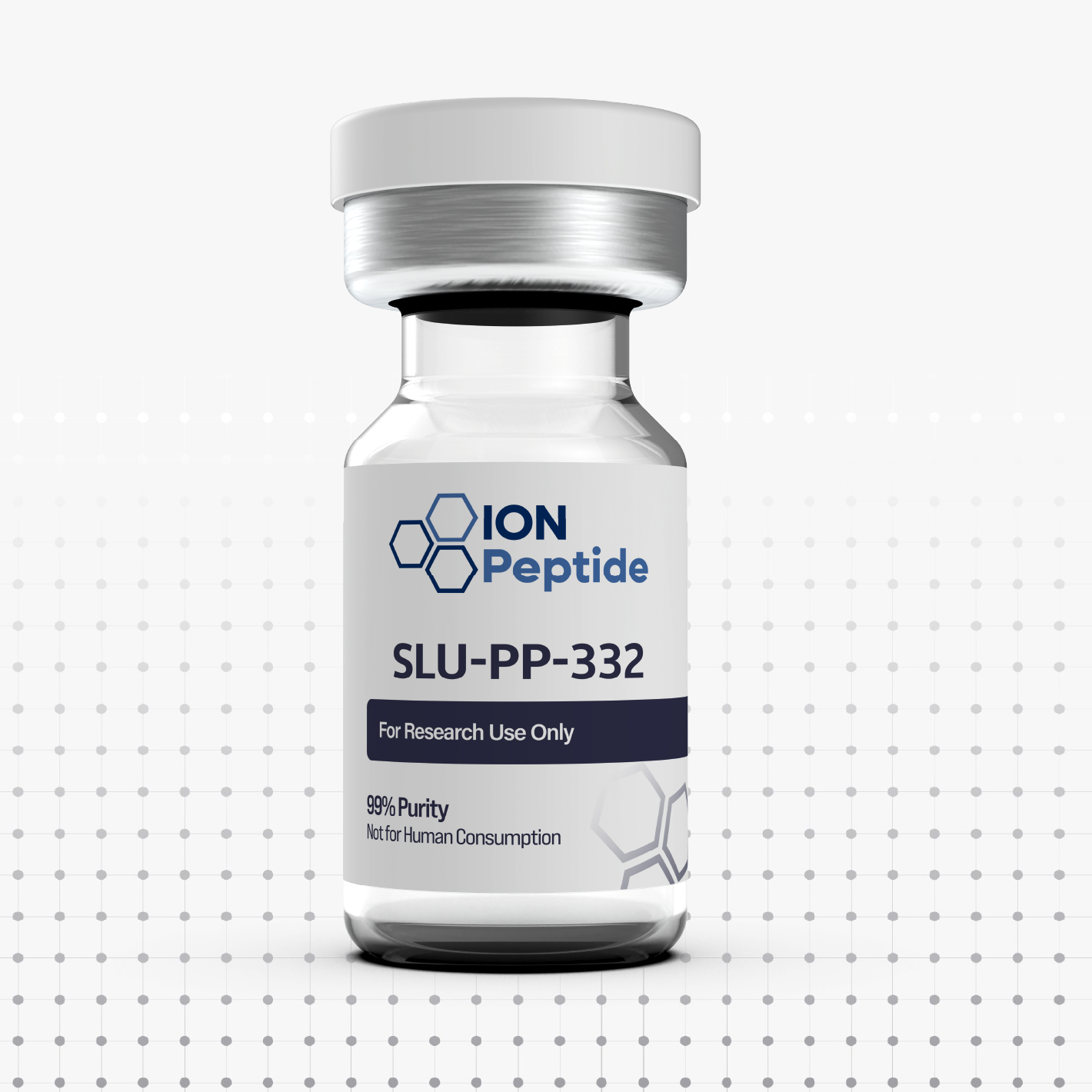


Buy SLU-PP-332 Online
Buy SLU-PP-332 Online is a synthetic small molecule that has attracted significant attention within metabolic and exercise-mimetic research. Although it is often discussed alongside peptides in research communities, SLU-PP-332 is not a peptide. Instead, it is a laboratory-developed compound designed to activate estrogen-related receptors (ERRs), a family of nuclear receptors involved in energy metabolism, mitochondrial function, and cellular adaptation to exercise. Recent preclinical studies have generated interest in its ability to activate pathways associated with endurance training and metabolic regulation. However, it remains an experimental research compound with no approved human therapeutic use and no completed human clinical trials.
What Is SLU-PP-332?
SLU-PP-332 was developed as a pan-agonist of estrogen-related receptors, including ERRα, ERRβ, and ERRγ. These receptors act as transcription factors that regulate genes involved in oxidative metabolism, mitochondrial biogenesis, and energy homeostasis. Because many of these pathways are also activated during aerobic exercise, researchers have described SLU-PP-332 as an “exercise mimetic” in preclinical studies.
Unlike traditional performance-enhancing compounds, SLU-PP-332 does not function as a hormone. Instead, it influences gene expression through receptor activation, making it a unique subject of investigation within metabolic research.
Understanding Estrogen-Related Receptors
Despite their name, estrogen-related receptors do not bind estrogen. They belong to a family of orphan nuclear receptors involved in regulating cellular energy production and mitochondrial activity. These receptors are highly expressed in tissues with substantial energy demands, including skeletal muscle, the heart, liver, kidney, and brown adipose tissue.
Researchers are interested in ERRs because they help control:
- Mitochondrial biogenesis
- Oxidative metabolism
- Fatty acid oxidation
- Energy expenditure
- Cellular adaptation to endurance activity
- Skeletal muscle metabolic programming
SLU-PP-332 was specifically developed to activate these receptors and investigate how ERR signalling affects metabolic function.
How SLU-PP-332 Works
SLU-PP-332 functions by binding to and activating ERR receptors. Activation of these receptors increases the expression of genes associated with mitochondrial function, oxidative phosphorylation, and fatty acid utilisation. Researchers believe this mechanism contributes to the exercise-like metabolic adaptations observed in animal studies.
The compound has also been linked to activation of pathways involving PGC-1α, a key regulator of mitochondrial biogenesis and endurance adaptation. Through these interactions, SLU-PP-332 serves as a valuable research tool for studying metabolic regulation and exercise-responsive gene networks.
Why Researchers Are Interested in SLU-PP-332
Scientific interest in SLU-PP-332 continues to grow because it provides a novel way to investigate biological pathways typically activated by endurance exercise. Researchers use it to explore questions related to:
Metabolic Regulation
The compound is frequently studied in relation to energy metabolism, fatty acid oxidation, and mitochondrial efficiency. These processes are fundamental to cellular energy production and physiological adaptation.
Mitochondrial Biology
Mitochondria are responsible for producing energy within cells. SLU-PP-332 has become an important research tool for examining how receptor activation influences mitochondrial development and function.
Exercise Adaptation Research
Animal studies have suggested that SLU-PP-332 can activate gene programs commonly associated with aerobic training. Researchers continue to investigate these findings to better understand exercise-related signalling pathways.
Ageing and Cellular Function
Some preclinical investigations have explored the role of ERR activation in age-related changes to mitochondrial activity and cellular energy production. These studies remain ongoing and are limited to laboratory models.
Current State of Research
Most published research involving SLU-PP-332 has been conducted in animal models and laboratory settings. Studies have examined its effects on endurance-related pathways, mitochondrial function, and metabolic regulation. However, no completed human clinical trials have established its safety, effectiveness, or appropriate use in humans.
This distinction is important because findings observed in laboratory models do not necessarily translate to human outcomes. Researchers continue to emphasise that SLU-PP-332 remains an experimental compound intended for scientific investigation.
Scientific Challenges and Limitations
While research interest remains high, several limitations should be considered:
Lack of Human Data
No completed human clinical trials currently exist. Much of the available information comes from animal and in vitro research.
Long-Term Safety Unknown
Researchers do not yet have sufficient information regarding long-term effects in humans. Additional studies are needed before broader conclusions can be drawn.
Ongoing Mechanistic Research
Scientists continue to investigate exactly how ERR activation influences metabolic adaptation and mitochondrial regulation. The field remains active and evolving.
Quality Considerations in Research
As with any research compound, quality control is an important factor. Researchers generally evaluate:
- Compound identity verification
- Purity standards
- Stability testing
- Manufacturing consistency
- Analytical documentation
Reliable quality standards help support reproducible scientific investigations and accurate experimental results.
Storage and Handling
Laboratory compounds should be stored according to manufacturer specifications and handled using appropriate research protocols. Proper storage helps maintain compound stability and research integrity.
Common laboratory considerations include:
- Temperature-controlled storage
- Protection from excessive moisture
- Proper labeling and documentation
- Controlled handling procedures
- Compliance with research safety standards
Future Directions
The future of SLU-PP-332 research will likely focus on improving scientific understanding of ERR signalling and metabolic regulation. Researchers continue to investigate:
- Exercise-responsive gene networks
- Mitochondrial function
- Energy metabolism
- Cellular adaptation mechanisms
- Age-related metabolic changes
- Novel ERR-targeting compounds
Recent studies have also explored modifications of the SLU-PP-332 molecular structure to better understand receptor selectivity and biological activity. These efforts may help expand knowledge of ERR pharmacology and metabolic research.
Conclusion
SLU-PP-332 represents an intriguing area of scientific investigation within metabolic and exercise-mimetic research. By activating estrogen-related receptors involved in mitochondrial function and energy metabolism, the compound provides researchers with a valuable tool for studying cellular adaptation and metabolic regulation. Current evidence remains limited to preclinical research, and no approved human uses or completed clinical trials currently exist. As research progresses, SLU-PP-332 is expect to remain an important subject in the study of mitochondrial biology, exercise-responsive signalling pathways, and metabolic science.
Related products

All