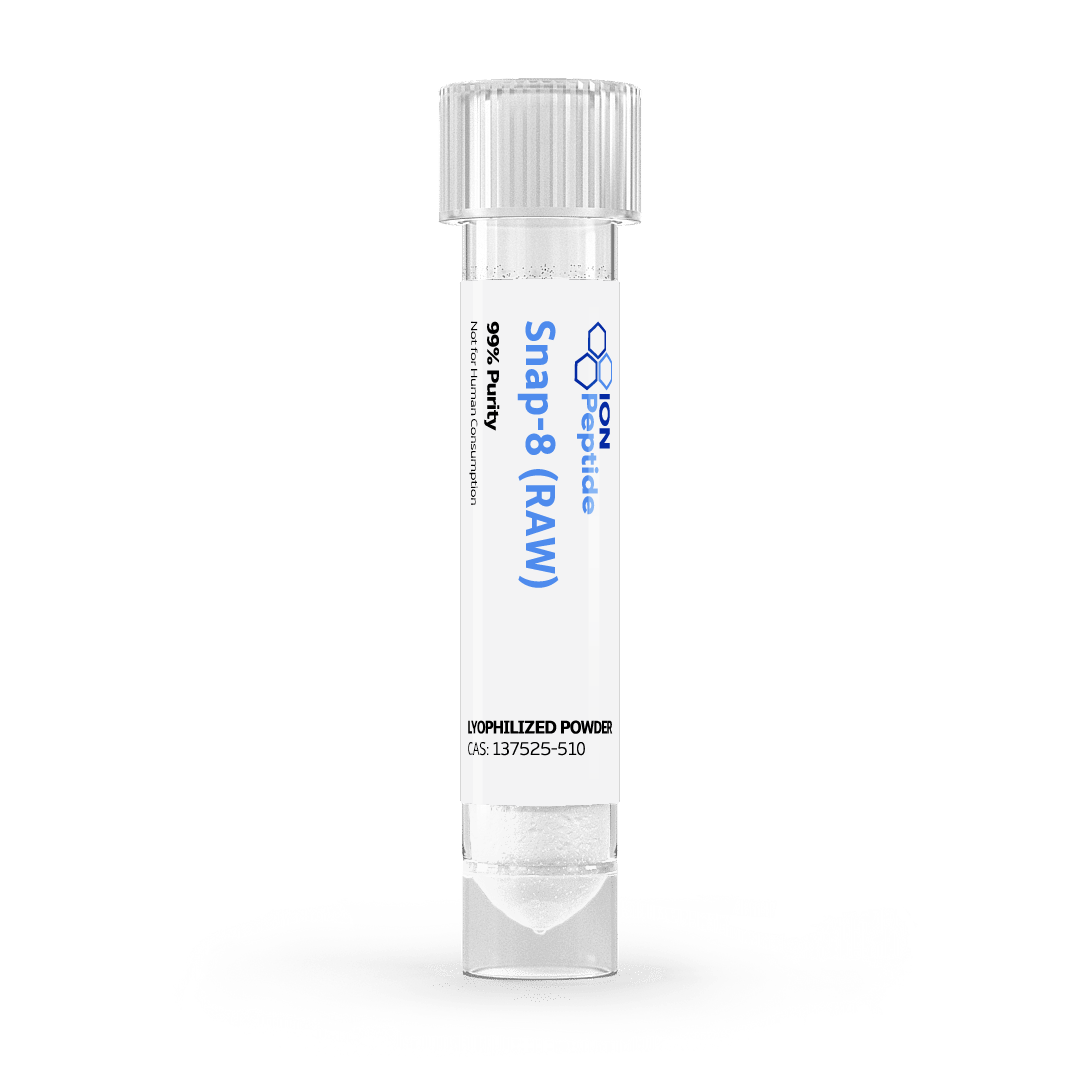

Buy Snap 8 Raw 1mg Online
Buy Snap 8 Raw 1mg Online, scientifically known as Acetyl Octapeptide-3, is one of the most recognised synthetic peptides in modern cosmetic science. Developed as an advanced evolution of earlier peptide technologies, SNAP-8 has become a popular subject of research among cosmetic chemists, formulation scientists, and skincare professionals interested in peptide-based innovations. Its unique molecular structure and biomimetic design have made it a frequently discussed ingredient in studies related to skin appearance, cosmetic formulations, and peptide technology.
As interest in peptide science continues to expand, SNAP-8 remains an important example of how synthetic peptides can be engineered to interact with biological signalling pathways. Researchers continue to explore its properties, stability characteristics, formulation compatibility, and role within cosmetic ingredient development.
This article provides a detailed overview of SNAP-8 Raw 1mg, its scientific background, molecular structure, research applications, and significance within modern cosmetic science.
What Is SNAP-8?
SNAP-8 is a synthetic octapeptide composed of eight amino acids. It was developed using biomimetic design principles, meaning that its structure was created to mimic specific biological processes found naturally within the body.
The peptide is widely known within cosmetic research because it was engineered as an enhanced version of earlier neurotransmitter-related peptide technologies. Researchers have investigated SNAP-8 as part of broader studies focused on molecular signalling, peptide stability, and cosmetic ingredient innovation.
Unlike hormones or pharmaceutical compounds, SNAP-8 is primarily discussed within cosmetic science and topical formulation research. Its role as a signalling peptide has contributed to its popularity among scientists studying advanced skincare ingredients.
Understanding Peptide Technology
Peptides are short chains of amino acids that serve as signalling molecules throughout biological systems. They play essential roles in cellular communication, tissue regulation, and molecular interactions.
Researchers are interested in peptides because they can:
- Transmit biological signals
- Interact with specific molecular targets
- Support cellular communication studies
- Serve as models for biological processes
- Contribute to ingredient innovation
Advances in peptide synthesis have enabled scientists to design highly specialised peptides with precise structural characteristics. SNAP-8 represents one example of this growing field of peptide engineering.
The Science Behind Biomimetic Peptides
SNAP-8 belongs to a category known as biomimetic peptides. These peptides are designed to imitate specific naturally occurring biological mechanisms while offering improved stability and formulation compatibility.
Biomimetic peptides have become increasingly important because they allow researchers to investigate how molecular structures influence biological responses.
Benefits of biomimetic peptide research include:
- Improved molecular precision
- Enhanced stability characteristics
- Consistent manufacturing quality
- Controlled structural design
- Expanded formulation possibilities
These qualities have contributed to the growing interest in peptides throughout the cosmetic and biotechnology industries.
Molecular Structure of SNAP-8
The structure of SNAP-8 was specifically engineered to extend and refine the functionality of earlier peptide technologies. By incorporating additional amino acids into the sequence, scientists sought to improve peptide performance and stability characteristics.
Researchers studying peptide chemistry often analyse:
- Amino acid composition
- Molecular stability
- Structural conformation
- Interaction mechanisms
- Formulation behavior
SNAP-8 continues to serve as an important example of how peptide structures can be modified to achieve specific research objectives.
Why Researchers Study SNAP-8
Several factors contribute to scientific interest in SNAP-8.
Cosmetic Ingredient Development
One of the primary areas of investigation involves cosmetic formulation research. Scientists examine how peptide ingredients interact with formulation systems and contribute to product innovation.
Molecular Communication Research
Peptides are essential components of biological signalling networks. SNAP-8 provides researchers with an opportunity to study how synthetic peptides interact with signalling pathways.
Formulation Stability Studies
The stability of cosmetic ingredients plays a critical role in product development. Researchers investigate how peptides maintain structural integrity under various environmental and formulation conditions.
Advanced Peptide Engineering
SNAP-8 is frequently discussed as an example of modern peptide engineering and synthetic molecular design.
The Growing Popularity of Peptides in Cosmetics
Peptides have become one of the fastest-growing categories within cosmetic science. Consumer demand for scientifically developed ingredients has encouraged researchers to explore peptide-based technologies across a wide range of applications.
Several trends have contributed to this growth:
Increased Scientific Understanding
Advances in molecular biology have improved researchers’ understanding of peptide function and signaling mechanisms.
Improved Manufacturing Technologies
Modern peptide synthesis allows for highly precise and reproducible production methods.
Innovation in Cosmetic Formulations
Peptides offer opportunities for developing sophisticated ingredient systems and advanced formulations.
Continued Research Investment
The cosmetic industry continues to invest heavily in peptide research and development, leading to ongoing innovation.
Research Applications of SNAP-8
SNAP-8 is studied across several areas of cosmetic and biochemical research.
Cosmetic Chemistry
Researchers investigate how peptides interact with cosmetic formulations and ingredient systems.
Molecular Biology
Peptides serve as useful tools for studying cellular communication and signalling pathways.
Biotechnology Research
The development of synthetic peptides contributes to broader advances in biotechnology and molecular engineering.
Formulation Science
Scientists explore how peptide compounds perform within creams, serums, emulsions, and other cosmetic delivery systems.
Quality Considerations for Research Peptides
When working with peptide materials, quality is a critical factor. Researchers depend on reliable products to support accurate and reproducible investigations.
Common quality considerations include:
- Peptide purity
- Analytical verification
- Manufacturing consistency
- Stability testing
- Documentation standards
- Batch-to-batch reliability
Maintaining high standards helps ensure the integrity of scientific research.
Storage and Handling Practices
Proper storage and handling procedures are essential for preserving peptide quality.
Researchers generally recommend:
Temperature Control
Peptides should be stored according to the manufacturer’s specifications to maintain stability.
Moisture Protection
Exposure to excessive humidity may affect peptide integrity.
Appropriate Packaging
Proper packaging helps protect peptides from environmental factors.
Careful Handling
Laboratory best practices should be followed to minimise contamination and preserve product quality.
These procedures support long-term stability and reliable research outcomes.
Advances in Synthetic Peptide Development
The field of synthetic peptide development has evolved rapidly over the past several decades. Scientists now have access to advanced technologies that allow precise control over peptide structure and function.
Recent developments include:
- Enhanced peptide synthesis methods
- Improved purification technologies
- Advanced analytical testing
- Novel delivery systems
- Expanded molecular design capabilities
SNAP-8 represents one example of how these innovations have influenced modern cosmetic ingredient research.
Future Directions for SNAP-8 Research
Researchers continue to explore new opportunities for peptide-based technologies. Future investigations involving SNAP-8 may focus on:
Enhanced Formulation Systems
Scientists are continually developing new methods for incorporating peptides into cosmetic products.
Improved Stability Technologies
Research aims to optimise peptide stability under various storage and application conditions.
Expanded Molecular Understanding
Ongoing studies continue to improve the understanding of peptide interactions and signalling mechanisms.
Biotechnology Applications
Advances in peptide engineering may lead to new opportunities across biotechnology and cosmetic science.
The Importance of Evidence-Based Cosmetic Research
Scientific progress depends on objective investigation, reproducible methodology, and rigorous evaluation of data.
Researchers studying SNAP-8 emphasise the importance of:
- Transparent experimentation
- Peer-reviewed research
- Reliable analytical methods
- Reproducible findings
- Continuous scientific evaluation
These principles help ensure that advancements in peptide science are supported by credible evidence.
Conclusion
SNAP-8 Raw 1mg remains one of the most recognised synthetic peptides in cosmetic science. Its biomimetic design, engineered molecular structure, and relevance to peptide research have made it an important subject of investigation within the fields of cosmetic chemistry, biotechnology, and molecular biology.
As peptide technology continues to evolve, SNAP-8 serves as an excellent example of how synthetic peptides can contribute to scientific innovation and ingredient development. Ongoing research will continue to expand understanding of peptide functionality, molecular signalling, and the future of advanced cosmetic science.
For educational information about peptide research and related compounds, visit https://ionpeptides.store/. For general inquiries, contact WhatsApp: +1(318)341-5522 or email: support@ionpeptides.online.
Related products