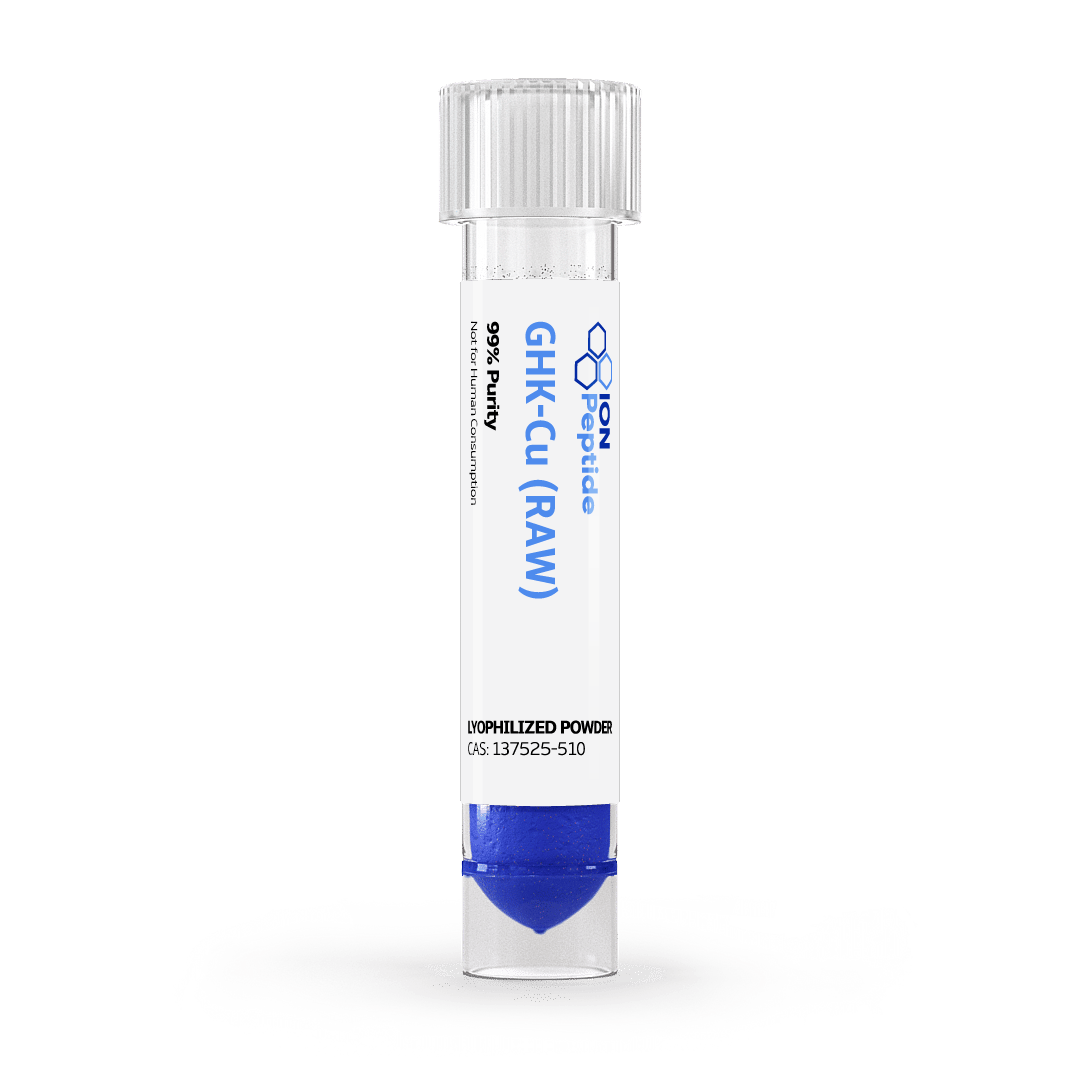
Buy GHK-Cu (Raw) 1g Online
Buy GHK-Cu (Raw) 1g Online. Peptide science has become one of the most exciting areas of modern biotechnology, molecular biology, and cosmetic research. Among the many peptides being investigated today, GHK-Cu (Copper Tripeptide-1) has gained considerable attention from researchers because of its unique molecular structure and broad scientific applications.
GHK-Cu is a naturally occurring copper-binding peptide composed of three amino acids. Since its discovery, it has become one of the most extensively studied peptides in scientific literature, particularly in research involving cellular signalling, skin biology, and tissue-related studies.
As interest in peptides continues to grow, many laboratories and researchers seek high-quality peptide materials for analytical and experimental purposes. GHK-Cu (Raw) 1g is often discussed in the context of laboratory research and scientific investigation, where peptide purity and consistency are essential.
This educational article explores the science of GHK-Cu, its molecular characteristics, research significance, and why copper peptides continue to attract attention in biotechnology and cosmetic science.
What Is GHK-Cu?
GHK-Cu stands for Glycyl-L-Histidyl-L-Lysine Copper. It is a naturally occurring tripeptide consisting of:
- Glycine
- Histidine
- Lysine
These three amino acids bind with a copper ion to form a highly stable peptide-copper complex known as Copper Tripeptide-1.
Researchers first identified GHK in human plasma and later discovered it in various tissues throughout the body. Since then, numerous studies have explored its biological activities and interactions within cellular systems.
Today, GHK-Cu is widely recognised in:
- Peptide research
- Cosmetic science
- Molecular biology
- Biotechnology
- Cellular signalling studies
- Analytical chemistry
Its versatility has made it one of the most recognised peptides in scientific research.
Understanding Peptides
Peptides are short chains of amino acids linked together by peptide bonds.
Scientists investigate peptides because they participate in many biological processes, including:
- Cellular communication
- Molecular signaling
- Protein interactions
- Biological regulation
- Physiological coordination
Peptides serve as important tools for understanding how cells communicate and respond to environmental changes.
Because of its relatively simple structure and well-documented biological activity, GHK-Cu has become an important model compound in peptide science.
The Molecular Structure of GHK-Cu
The molecular structure of GHK-Cu contributes significantly to its scientific importance.
Researchers study:
Amino Acid Sequence
The arrangement of glycine, histidine, and lysine determines how the peptide interacts with copper.
Copper Binding Properties
Copper ions influence the peptide’s stability and biological behaviour.
Molecular Stability
Scientists evaluate how GHK-Cu behaves under different laboratory conditions.
Structural Characteristics
Researchers investigate how structure affects biological activity.
Understanding these properties helps scientists better understand peptide behaviour in complex biological systems.
Why Researchers Study Copper Peptides
Copper peptides continue to attract attention because they participate in various biological processes.
Researchers investigate GHK-Cu because it is involved in:
- Cellular signalling pathways
- Protein interactions
- Molecular communication
- Biological regulation
- Tissue-related studies
- Cosmetic ingredient research
Its broad scientific relevance makes GHK-Cu an important compound across multiple disciplines.
GHK-Cu and Cellular Communication
Modern biology recognises that cells communicate through highly organised signalling systems.
Scientists study GHK-Cu because it contributes to:
Molecular Signaling
Helping researchers understand communication between cells.
Biological Regulation
Supporting investigations into complex physiological pathways.
Cellular Coordination
Providing insights into how biological systems maintain balance.
Protein Interactions
Helping researchers explore relationships between peptides and cellular proteins.
These areas remain active fields of scientific investigation.
GHK-Cu in Cosmetic Science
One of the most widely recognised areas of GHK-Cu research is cosmetic science.
Researchers study copper peptides because they have become popular ingredients in:
- Facial serums
- Creams
- Moisturizers
- Hair products
- Cosmetic masks
- Skin-conditioning formulations
The increasing popularity of peptide-based cosmetics has contributed significantly to scientific interest in GHK-Cu.
Its inclusion in advanced cosmetic formulations reflects the growing demand for science-inspired beauty products.
Biotechnology and Peptide Research
Modern biotechnology increasingly relies on peptide research to understand biological systems.
GHK-Cu is frequently investigated in:
Molecular Biology
Studying signalling pathways and cellular responses.
Biochemistry
Exploring molecular interactions.
Systems Biology
Examining interconnected biological networks.
Analytical Chemistry
Developing methods for peptide identification and characterisation.
Cosmetic Research
Understanding peptide applications in personal care products.
These research areas continue expanding as scientific technologies evolve.
Structure-Function Relationships
One of the central goals of peptide science is understanding how molecular structure influences biological activity.
Researchers investigate:
- Amino acid composition
- Molecular arrangement
- Chemical stability
- Receptor interactions
- Biological outcomes
GHK-Cu provides a valuable model for studying these structure-function relationships.
Understanding these principles contributes to broader scientific knowledge about peptides and biological communication.
Laboratory Analysis of GHK-Cu
Researchers use sophisticated technologies to study peptide compounds.
Common analytical methods include:
High-Performance Liquid Chromatography (HPLC)
Used to analyse peptide purity and composition.
Mass Spectrometry
Provides molecular characterisation and identification.
Spectroscopy
Helps investigate chemical properties.
Computational Modeling
Predicts molecular interactions and structural behaviour.
Biochemical Assays
Used to evaluate biological activity and signalling mechanisms.
These technologies have greatly expanded scientific understanding of peptides.
Importance of Quality Standards in Peptide Research
Reliable scientific investigation depends on strict quality standards.
Researchers often evaluate:
Purity
Ensuring reproducible results.
Identity Verification
Confirming molecular composition.
Stability
Assessing storage characteristics and performance.
Documentation
Supporting transparency and scientific integrity.
Consistency
Maintaining reliable experimental conditions.
Quality standards are essential for meaningful scientific research.
Storage and Handling Considerations
Proper handling practices are important in laboratory environments.
General recommendations often include:
- Following supplier instructions
- Maintaining appropriate storage conditions
- Avoiding contamination
- Using suitable laboratory procedures
- Monitoring material stability
Researchers should always follow institutional guidelines and laboratory protocols.
Future Directions in GHK-Cu Research
Scientific interest in copper peptides continues to expand.
Future areas of investigation may include:
Advanced Molecular Biology
Understanding increasingly complex signalling pathways.
Systems Biology
Examining peptide interactions within biological networks.
Cosmetic Innovation
Developing new peptide-based formulations.
Computational Research
Modelling peptide behaviour and interactions.
Biotechnology Applications
Creating new analytical tools and research methods.
These developments are expected to contribute significantly to peptide science.
The Growing Importance of Peptide Science
Peptide research has become one of the most dynamic areas of modern scientific investigation.
Researchers increasingly recognise peptides as valuable tools for understanding:
- Cellular communication
- Biological regulation
- Molecular signaling
- Protein interactions
- Complex physiological systems
GHK-Cu remains one of the most studied and recognised peptides because of its broad scientific relevance and extensive research history.
As biotechnology and molecular science continue to advance, interest in copper peptides is likely to remain strong.
Conclusion
GHK-Cu (Raw) 1g represents an important subject within peptide science and biotechnology research. As a naturally occurring copper-binding tripeptide, GHK-Cu has become one of the most extensively studied peptides in molecular biology, cosmetic science, and cellular signalling research.
Its unique structure, broad research applications, and importance in understanding biological communication continue to make GHK-Cu a valuable focus of scientific investigation. As peptide technologies and analytical methods advance, copper peptides are expected to remain significant tools in expanding scientific knowledge.
For additional information regarding peptide-related research topics:
Website: https://ionpeptides.store/
WhatsApp: +1 (318) 341-5522
Email: support@ionpeptides.online
Related products