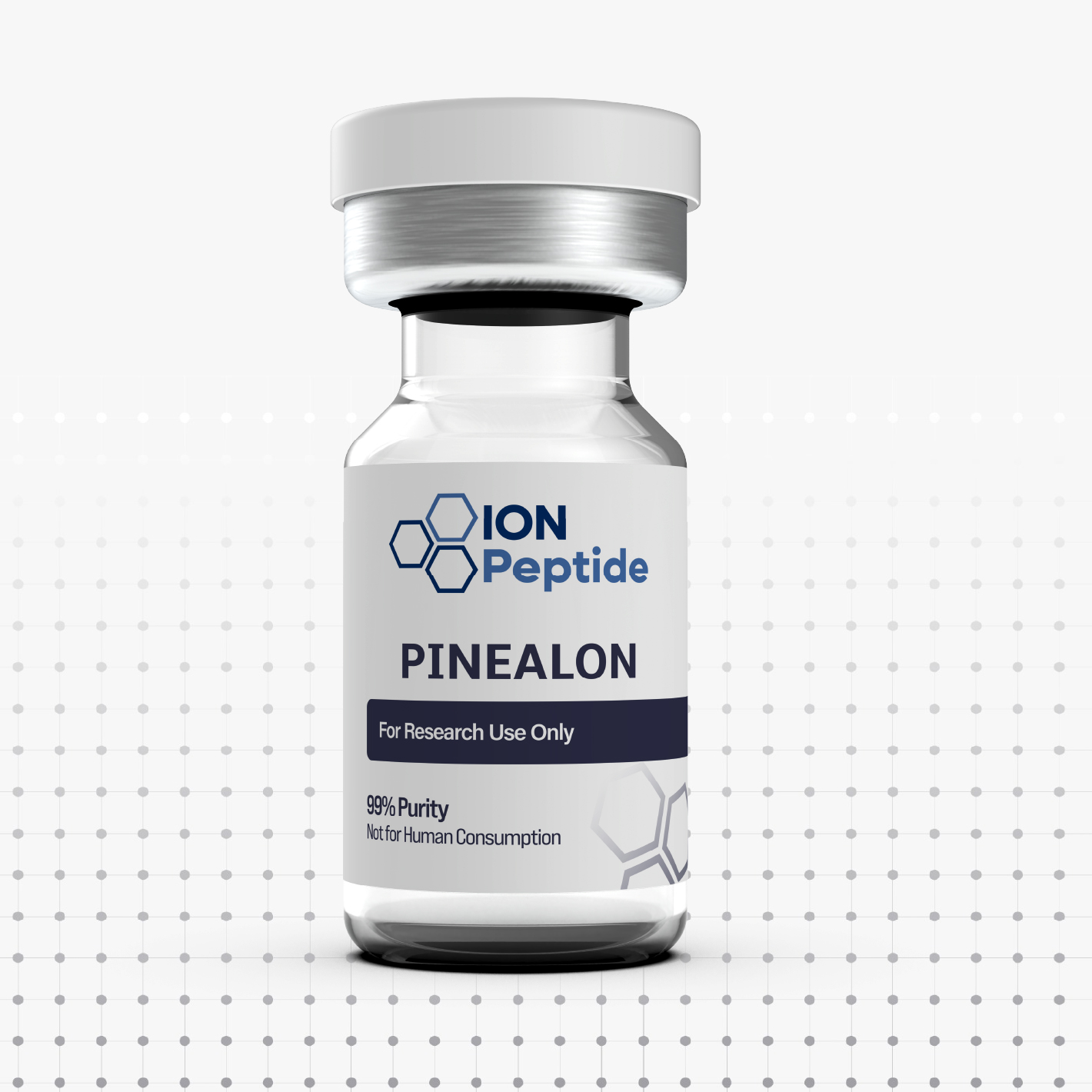
Buy Pinealon 10mg Online
Buy Pinealon 10mg Online is a synthetic tripeptide that has attracted increasing interest within neuroscience, peptide biology, and molecular signalling research. Developed through peptide research programs focused on neuroactive compounds, Pinealon has become a topic of investigation because of its interactions with cellular communication pathways and neurological systems.
Researchers continue to study Pinealon because it provides a useful model for understanding how small synthetic peptides can influence molecular signalling, cellular adaptation, and neurobiological regulation. As peptide science advances, compounds such as Pinealon are helping scientists explore the complex relationships between peptide structure, receptor interactions, and physiological communication networks.
This article provides an educational overview of Pinealon 10mg, including its scientific background, molecular characteristics, research applications, and significance within modern peptide research.
What Is Pinealon?
Pinealon is a synthetic tripeptide composed of three amino acids: glutamic acid, aspartic acid, and arginine. It was developed as part of broader research into short regulatory peptides and their potential roles in neurobiology and cellular signalling.
Unlike larger proteins or hormones, Pinealon is a relatively small peptide molecule. Researchers are interested in such short peptides because they can participate in highly specific signalling processes while remaining structurally simple and experimentally accessible.
The peptide has been examined in laboratory studies involving neural tissue, cellular communication, and molecular regulation. Although research is ongoing, Pinealon remains primarily a scientific and experimental compound rather than a widely established therapeutic agent.
Understanding Peptides in Biology
Peptides are short chains of amino acids that act as signalling molecules throughout living organisms. They help coordinate communication between cells, tissues, and physiological systems.
Researchers study peptides because they:
-
Act as biological messengers
-
Interact with specific cellular receptors
-
Regulate molecular signalling pathways
-
Influence cellular communication
-
Contribute to physiological adaptation and regulation
The growing field of peptide science has revealed that even very small peptides can participate in complex biological processes. Pinealon is one example of a short synthetic peptide being explored for its interactions with neural and cellular systems.
The Development of Pinealon
Pinealon emerged from research efforts aimed at understanding biologically active short peptides and their potential influence on cellular function. Scientists investigating neuroactive peptides recognised that small peptide molecules could provide valuable insights into neural signalling and molecular communication.
Research involving Pinealon has explored:
-
Neuronal signalling pathways
-
Cellular communication mechanisms
-
Molecular regulation processes
-
Neurobiological adaptation
-
Peptide-mediated signalling networks
These investigations have contributed to ongoing scientific interest in Pinealon and related short regulatory peptides.
Molecular Structure and Properties
The structure of a peptide strongly influences its biological behaviour. Pinealon’s tripeptide composition makes it relatively small compared with many other research peptides.
Researchers examine its:
-
Amino acid sequence
-
Structural conformation
-
Stability characteristics
-
Solubility properties
-
Interaction with biological targets
Because Pinealon is composed of only three amino acids, it provides an interesting model for studying how very small peptides can still participate in signalling and regulatory processes.
Why Researchers Study Pinealon
Several factors contribute to scientific interest in Pinealon.
Neuroscience Research
One of the primary areas of investigation involves the nervous system. Researchers study Pinealon to better understand how short peptides interact with neural communication pathways and cellular signalling mechanisms.
Cellular Communication
Cells rely on signalling molecules to coordinate biological processes. Pinealon is used in research exploring how peptide signals influence cellular behaviour and molecular regulation.
Molecular Biology
Scientists investigate Pinealon as part of broader efforts to understand peptide-mediated gene regulation, protein interactions, and intracellular signalling networks.
Ageing and Cellular Adaptation Studies
Some research programs have examined how short regulatory peptides may relate to cellular adaptation and age-associated biological processes, although this area remains under active investigation.
Pinealon and Neuroscience
Neuroscience is one of the most active fields involving Pinealon research. The nervous system depends on intricate communication networks involving neurotransmitters, receptors, ions, and signalling molecules.
Researchers studying Pinealon often focus on:
-
Neural communication pathways
-
Peptide-receptor interactions
-
Cellular signalling mechanisms
-
Neurochemical regulation
-
Molecular adaptation within neural tissues
These studies aim to improve understanding of how peptide signalling contributes to nervous system function and cellular communication.
The Importance of Short Regulatory Peptides
Short regulatory peptides have become an important area of scientific interest because they may influence biological processes through highly specific molecular interactions.
Researchers value these peptides because they:
-
Are structurally simple
-
Can interact with defined biological targets
-
May participate in cellular regulation
-
Provide useful models for molecular research
-
Help scientists study signalling networks with greater precision
Pinealon is frequently discussed within this broader category of short regulatory peptides.
Research Applications of Pinealon
Pinealon has been explored across several scientific disciplines.
Neurobiology
Researchers investigate how the peptide influences neural signalling and cellular communication within nervous system models.
Cell Biology
Studies examine how Pinealon interacts with cellular pathways and regulatory mechanisms.
Molecular Genetics
Some investigations explore peptide-mediated effects on gene expression and molecular signalling networks.
Biochemistry
Researchers analyse the peptide’s structural properties, stability, and interactions with biological molecules.
Gerontology Research
Pinealon has also been discussed within broader research related to ageing and cellular maintenance processes, though conclusions remain preliminary and research is ongoing.
Peptides and Cellular Signalling
Cellular signalling is fundamental to nearly every biological process. Peptides serve as one of the body’s major classes of signalling molecules, helping cells exchange information and coordinate responses.
Researchers study peptide signalling because it helps explain:
-
Cellular coordination
-
Gene regulation
-
Adaptive responses
-
Tissue communication
-
Physiological regulation
Pinealon contributes to this research as a model for understanding how small synthetic peptides participate in these communication networks.
Quality Considerations in Peptide Research
Reliable research depends on high-quality peptide materials. Scientists working with compounds such as Pinealon often evaluate:
-
Purity Standards: high-purity peptides help reduce experimental variability and improve data reliability.
-
Identity Verification: analytical testing confirms molecular composition and structure.
-
Stability Assessment: Researchers examine how peptides maintain integrity under different storage and experimental conditions.
-
Manufacturing Consistency: consistent production methods support reproducible scientific outcomes.
-
Documentation and Quality Control: accurate records and analytical data contribute to scientific rigour and transparency.
These factors are essential for maintaining reliability in peptide research.
Storage and Handling Practices
Proper storage and handling help preserve peptide quality and experimental reliability.
General laboratory recommendations include:
-
Store according to manufacturer guidelines
-
Maintain appropriate temperature conditions
-
Protect peptides from excessive moisture
-
Use sterile handling techniques
-
Avoid contamination and repeated unnecessary exposure to the environment
Researchers should always follow established laboratory protocols when working with peptide materials.
Future Directions in Pinealon Research
Peptide science continues to evolve rapidly, and researchers remain interested in expanding knowledge about short regulatory peptides such as Pinealon.
Potential future areas of investigation include:
-
Advanced neural signalling studies
-
Peptide-receptor interaction mapping
-
Cellular adaptation mechanisms
-
Gene expression regulation
-
Systems-level neurobiology
-
Development of new synthetic peptide analogues
As analytical technologies improve, scientists may gain deeper insights into how small peptides influence complex biological systems.
The Importance of Evidence-Based Research
Scientific progress depends on rigorous methodology, transparent reporting, and reproducible experimentation. Researchers studying Pinealon emphasise the importance of evidence-based investigation and careful interpretation of findings.
Key principles include:
-
Objective analysis
-
Peer-reviewed research
-
Reproducible methods
-
Accurate data interpretation
-
Continuous scientific evaluation
These standards help ensure that conclusions are supported by reliable evidence rather than speculation.
Conclusion
Pinealon 10mg remains an intriguing subject within neuroscience, molecular biology, and peptide research. Its simple tripeptide structure, neuroactive properties, and relevance to cellular signalling studies have made it an important topic of scientific investigation.
Researchers continue to explore Pinealon’s interactions with neural communication pathways, molecular regulation systems, and peptide-mediated biological processes. As peptide science advances, Pinealon serves as a valuable model for understanding how short synthetic peptides can influence complex cellular and neurological networks.
For educational information about peptide research and related scientific topics, visit https://ionpeptides.store/.
General inquiries can be directed to:
-
Website: https://ionpeptides.store/
-
WhatsApp: +1 (318) 341-5522
-
Email: support@ionpeptides.online
Related products
All
All
All