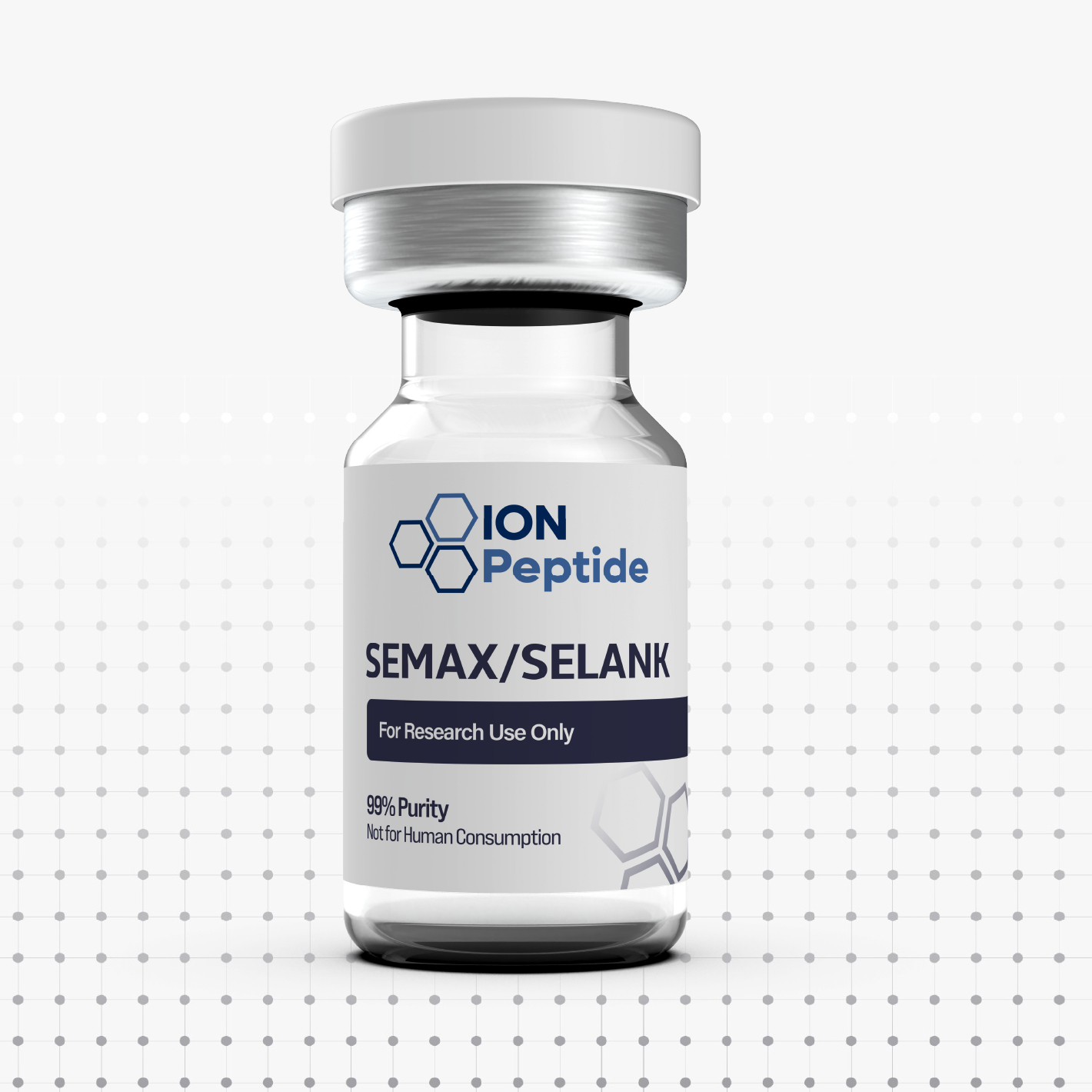


Buy Semax/Selank Online
Buy Semax/Selank Online are two synthetic peptides that have attracted considerable attention within neuroscience, neurobiology, and peptide research. Originally developed through Russian peptide research programs, both compounds have become subjects of ongoing scientific investigation due to their interactions with neurological signalling pathways and peptide-mediated communication systems. Although often discussed together, Semax and Selank possess distinct molecular origins and are studied for different biological mechanisms.
Researchers continue to explore these peptides because they provide valuable opportunities to investigate neurochemical regulation, cellular communication, receptor interactions, and neurobiological adaptation. As peptide science continues to advance, Semax and Selank remain among the most frequently discussed compounds in cognitive and neuroactive peptide research.
What Is Semax?
Semax is a synthetic heptapeptide derived from a fragment of adrenocorticotropic hormone (ACTH). Researchers designed the compound to retain certain neuroactive properties while differing from the hormonal activity associated with full-length ACTH. Scientific investigations have examined Semax because of its interactions with neurotrophic pathways and neurotransmitter-related signalling systems.
Studies have reported that Semax may influence pathways involving brain-derived neurotrophic factor (BDNF), nerve growth factor (NGF), and various neurochemical signalling mechanisms. Because of these characteristics, it has become an important research tool in neuroscience and molecular biology.
What Is Selank?
Selank is another synthetic heptapeptide, but unlike Semax, it was derived from tuftsin, a naturally occurring peptide associated with immune system biology. Researchers study Selank because of its interactions with neurochemical pathways, stress-related signalling mechanisms, and peptide-mediated communication networks.
Scientific investigations frequently examine how Selank interacts with neurotransmitter systems, immune-related signalling pathways, and molecular communication processes. Its distinct origin and biological profile make it an important subject within peptide research.
Similarities Between Semax and Selank
Although Semax and Selank originate from different parent molecules, they share several characteristics that contribute to their frequent comparison in scientific literature.
Researchers note that both compounds:
- Are synthetic heptapeptides
- Were developed through Russian peptide research programs
- Include structural modifications that improve stability
- Are investigated for neurological and cognitive research applications
- Serve as research tools for studying neurochemical signalling
- Continue to attract interest within neuroscience and peptide science communities
These similarities have led researchers to examine both peptides within broader studies involving neurobiology and molecular communication.
Key Differences Between Semax and Selank
Despite their similarities, important differences exist between the two compounds.
Semax Research Focus
Scientific studies involving Semax often focus on:
- Neurotrophic signaling
- BDNF-related pathways
- Cognitive function research
- Neuroprotection studies
- Cellular adaptation mechanisms
- Neurotransmitter regulation
Researchers frequently investigate how Semax interacts with pathways associated with learning, memory, and neuronal communication.
Selank Research Focus
Studies involving Selank often explore:
- Stress-related signalling pathways
- GABAergic mechanisms
- Immune-neural interactions
- Neurochemical regulation
- Emotional processing models
- Peptide communication systems
Its distinct biological origin provides researchers with opportunities to investigate different aspects of neurological and physiological regulation.
Why Researchers Study These Peptides Together
Scientists frequently examine Semax and Selank together because they represent two different approaches to neuroactive peptide research. While Semax is often associated with neurotrophic and cognitive pathways, Selank is commonly discussed in relation to stress regulation and neurochemical signalling mechanisms.
Studying both compounds allows researchers to explore:
- Neurotransmitter communication
- Peptide-receptor interactions
- Neuroplasticity research
- Cellular adaptation mechanisms
- Molecular signalling networks
- Integrated neurobiological processes
These investigations contribute to a broader understanding of how peptides participate in neurological regulation.
The Role of Peptides in Neuroscience
Peptides are among the most important signalling molecules within biological systems. They help coordinate communication between cells and tissues while regulating numerous physiological processes.
Researchers study peptides because they:
- Act as biological messengers
- Interact with specific receptors
- Support cellular communication
- Influence molecular signalling pathways
- Provide insight into physiological regulation
Semax and Selank serve as examples of how synthetic peptides can be used to investigate complex neurological systems.
Scientific Interest in Neuroactive Peptides
Interest in neuroactive peptides has grown significantly during the past several decades. Advances in biotechnology and molecular biology have improved researchers’ ability to study peptide structure, function, and biological interactions.
Current areas of investigation include:
- Neuroplasticity research
- Brain signalling networks
- Neurotransmitter regulation
- Molecular communication
- Receptor biology
- Systems neuroscience
Semax and Selank remain important examples of compounds used to explore these research areas.
Research Limitations
While scientific interest in Semax and Selank remains strong, researchers acknowledge several limitations.
Limited International Clinical Data
Many published studies originate from specific research programs and regions. Additional independent research may help expand understanding of these compounds.
Ongoing Investigation
The precise mechanisms underlying peptide-mediated neurological signalling remain active areas of research. Scientists continue to investigate how these compounds interact with broader biological systems.
Need for Continued Research
As with many research compounds, further investigation is required to clarify mechanisms, biological significance, and potential applications.
Quality and Research Standards
Researchers working with peptide materials emphasise the importance of quality control and scientific rigour.
Important considerations include:
- Analytical verification
- Purity assessment
- Stability testing
- Manufacturing consistency
- Proper documentation
- Reproducible methodologies
These standards help ensure reliable scientific investigations and accurate experimental outcomes.
Future Directions
The future of Semax and Selank research will likely focus on:
- Neurochemical signalling pathways
- Receptor interactions
- Neuroplasticity mechanisms
- Molecular communication networks
- Synthetic peptide engineering
- Advanced neuroscience applications
As peptide science continues to evolve, both compounds are expected to remain important subjects of investigation within neurobiology and molecular research.
Conclusion
Semax and Selank are two widely studied synthetic peptides that continue to attract attention within neuroscience and peptide research. Although they share several structural characteristics, their distinct biological origins and research focuses make them valuable tools for investigating different aspects of neurological regulation and cellular communication. Scientific studies continue to explore their mechanisms, signalling pathways, and relevance to broader questions in neurobiology and peptide science. As research advances, these compounds are likely to remain significant topics within modern neuroscience and molecular biology.
Related products